

Replacing the whole exhaust system isn’t always the right first step. A kitchen exhaust system upgrade may only need to address the component behind a performance concern, but changes to the hood, exhaust motor or ductwork can affect how the system works as a whole.
If smoke, heat or odours aren’t being extracted effectively, the key questions are which part needs attention and whether the work will disrupt kitchen operations. The answers depend on how the system performs, how its components interact and how they fit the existing kitchen layout.
This guide explains how to assess an upgrade scope for a commercial kitchen in Singapore. Learn when a targeted improvement may be suitable, when broader A&A works may need consideration, and what trade-offs to weigh before planning the project. You’ll also find what to prepare before speaking with a contractor, so you can discuss the hood, motor and ductwork together and identify a practical next step.
Key Takeaways
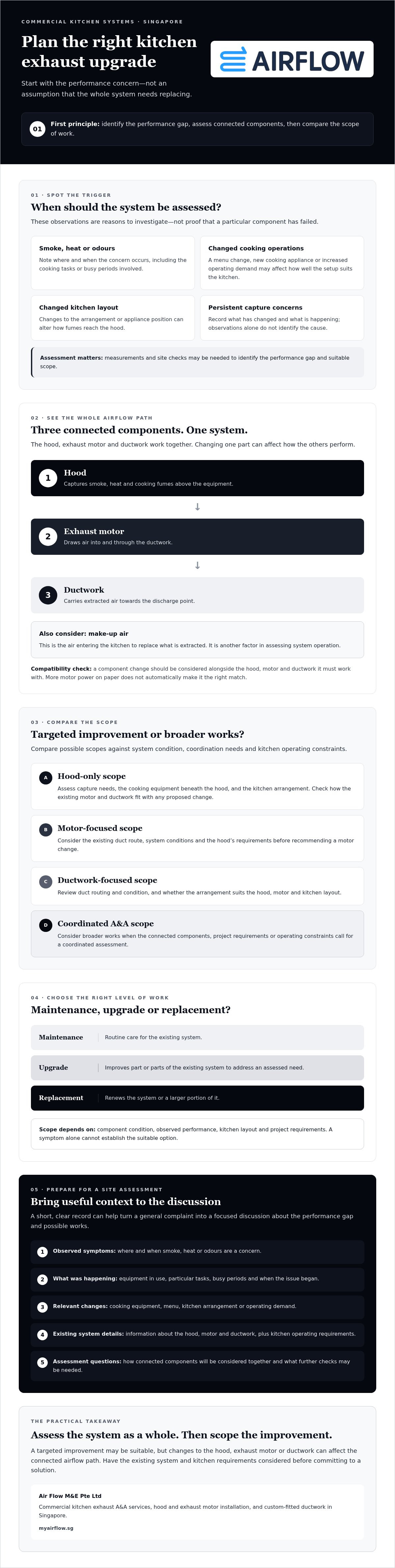
- Changes to cooking operations or the kitchen layout, as well as persistent capture concerns, can signal a need for assessment. Symptoms alone don’t confirm the fault.
- A kitchen exhaust system upgrade should address the performance gap while considering how the hood, exhaust motor and ductwork work together.
- Compare hood-only, motor-focused, ductwork-focused and coordinated A&A scopes against the system’s condition, coordination needs and operating constraints.
- Before requesting a site assessment, prepare notes on observed symptoms, existing system details and kitchen operating requirements.
- Air Flow M&E provides commercial kitchen exhaust A&A services, hood and exhaust motor installation, and custom-fitted ductwork in Singapore.
When does a commercial kitchen need an exhaust system upgrade?
Changes to cooking operations or the kitchen layout, along with persistent smoke, heat or odour concerns, can prompt a closer look at the exhaust system. These are reasons to investigate, not proof that a particular component has failed. A new cooking appliance or increased operating demand may also change how well the existing setup suits the kitchen.
The hood captures cooking fumes, the exhaust motor moves air through the ductwork, and the duct carries it to the discharge point. Because these parts form one airflow path, changing one can affect how the others perform. This kitchen ventilation system overview explains the basic role of ventilation in managing cooking smoke, grease and odours.
An upgrade is a targeted improvement to an existing commercial exhaust system, selected to address an assessed performance need without assuming the whole system must be replaced. For a kitchen exhaust system upgrade, first identify what has changed and have the connected components assessed before choosing a scope.
What operational signs should prompt an assessment?
Note where and when smoke, heat or odours become a concern. Record which cooking equipment is in use, whether the issue occurs during particular tasks or busy periods, and whether it began after a menu, equipment or layout change. This context can help a specialist investigate. It doesn’t confirm the cause: observations may point to a performance gap, but measurements and site checks may be needed to identify it.
Upgrade, maintenance, or replacement: what is the difference?
Maintenance is routine care for the existing system. An upgrade improves part or parts of that system to address an assessed need. Replacement renews the system or a larger portion of it. The right option depends on component condition, observed performance, kitchen layout and project requirements. A symptom alone can’t establish the suitable scope, so avoid committing to a solution before a qualified site assessment.
Before the assessment, gather a short record of the concern and any relevant changes to cooking equipment, menu, arrangement or operating demand. Ask how the hood, motor and ductwork will be considered together, and what further checks are needed. This helps turn a general complaint into a focused discussion about the performance gap and possible works, grounded in the existing commercial kitchen.
How the hood, exhaust motor, and ductwork affect upgrade performance
Exhaust performance depends on a connected airflow path. The hood captures smoke, heat and cooking fumes above the equipment. The exhaust motor draws that air into the ductwork, which carries it towards the discharge point. Make-up air, meaning the air entering the kitchen to replace what’s extracted, is another factor to consider when assessing system operation.
A component upgrade works best when the new part is compatible with the hood, motor and ductwork it must work alongside. Changing one part without reviewing the connected system may leave the original concern unresolved or create another airflow issue. A qualified assessment can check system conditions and relevant project requirements. The NFPA 96 standard is a reference for commercial cooking exhaust systems. Confirm which requirements apply to a Singapore project with the relevant authority or a qualified professional.
What should an upgraded hood or exhaust motor address?
A hood assessment should consider the cooking equipment beneath it, the operation’s capture needs and the kitchen arrangement. Changes to appliances or their position can affect how fumes reach the hood. For guidance on hood planning, see this commercial kitchen hood guide.
Motor selection depends on more than power alone. The existing duct route, system conditions and the hood’s requirements all matter. A specialist should assess these factors before recommending a motor change. A motor that appears more powerful on paper isn’t automatically the right match.
Why review ductwork and make-up air alongside equipment?
Duct routing and condition influence the path air must travel, which can affect how the motor and hood perform together. A motor-focused change may call for a ductwork review. A new hood may require checking whether the existing duct arrangement still suits the layout. Learn more about commercial kitchen ductwork fabrication and its role in fitting ductwork to a commercial kitchen.
Consider make-up air as part of the system assessment, rather than assuming it’s a standalone fix. The appropriate approach depends on site conditions and kitchen operations, so don’t choose a design without qualified assessment and project-specific information.
Air Flow M&E provides commercial exhaust A&A services, hood and motor installation, and custom-fitted ductwork. Its commercial kitchen exhaust services cover these connected components.
Targeted upgrade or broader exhaust system works: how to compare
A suitable kitchen exhaust system upgrade starts with the assessed performance gap, not an assumption that either one component or the whole system needs work. Compare possible scopes against site conditions, kitchen layout and operating requirements. This framework helps organise the discussion, but it doesn’t determine which option is feasible for your kitchen.
| Possible scope | What it may involve | Coordination and disruption questions | What assessment should establish |
|---|---|---|---|
| Hood-focused | Work centred on the hood’s fit or arrangement over the cooking equipment. | Will the existing motor and ductwork still suit the hood? What access or work area could be affected? | Whether the hood configuration fits the equipment and kitchen layout, and how it connects to the rest of the system. |
| Motor-focused | Work focused on the exhaust motor, including replacement if assessment indicates it’s relevant. | Does the duct route or hood need review too? How could the work affect kitchen operations? | Whether the motor suits the connected system conditions, rather than being judged on power alone. |
| Ductwork-focused | Changes to ductwork to suit the system or kitchen arrangement. | Could the work affect connected equipment, access or the kitchen’s operating schedule? | The duct route, its condition and its relationship to the hood and motor. |
| Coordinated A&A | Works that consider multiple connected components together. | What sequencing, access and operational downtime should be planned for this specific project? | How the combined scope fits the site, operating needs and project requirements. |
When might a component-focused upgrade be considered?
A focused scope may be considered when assessment identifies a particular component as relevant to the performance concern. Even then, ask whether adjoining parts need review. For example, a motor replacement should be considered in relation to the hood configuration, ductwork and airflow conditions. See this commercial exhaust motor replacement guide for more on that scenario.
When should operators consider coordinated A&A works?
A changed kitchen layout or new operating requirements may bring several components into scope at once. Coordinated A&A can help frame those connected works together, but it also requires planning for access, sequencing and the effect on kitchen operations. Ask what can be done, in what order, and what disruption to expect. The answers depend on the specific site. Read the kitchen ventilation A&A guide for more context.
This comparison is about scope, not pricing or guaranteed outcomes. A site assessment and discussion of operating requirements are needed to establish what’s feasible and which components should be included.
How to prepare for a commercial kitchen exhaust upgrade assessment
A clear record of what’s happening helps turn a general concern into a useful assessment discussion. Your observations can show when and where an issue occurs, but they can’t confirm airflow, identify a faulty component or establish which works are suitable. Those findings may require qualified site checks and measurements.
What information should an operator gather first?
Use this sequence to prepare for a kitchen exhaust system upgrade assessment. Don’t delay the discussion if older system records are missing. Note what you know and flag what needs to be checked on site.
- Document symptoms. Record where smoke, heat or odour concerns occur, when they happen, which equipment is in use and whether the issue is constant or linked to particular tasks.
- Gather system details. List the cooking equipment and note available information about the hood, exhaust motor and ductwork. Include past service or project records if you have them, but don’t assume they’re essential or complete.
- Describe changes and constraints. Note changes to the menu, operating hours, equipment or kitchen layout. Explain access windows, busy periods and any need to keep kitchen operations running during the project.
- Request an assessment. Share your observations and available records. Ask what further site checks are needed before anyone recommends a scope.
What questions should you ask an exhaust contractor?
Use the discussion to understand how the proposed works relate to the evidence and your kitchen’s practical needs. Helpful questions include:
- Which observed conditions inform the proposed scope, and which components are included?
- Will the hood, motor and ductwork need to be reviewed together? What site checks or measurements are needed to assess their condition and interaction?
- What access, coordination and work sequencing might the project require? How could the work affect kitchen operations, and what planning is needed for this site?
- Which compliance or approval requirements should be confirmed for these premises and works, and with which relevant authorities or qualified professionals?
Requirements can depend on the premises and project scope. Don’t assume the same approvals apply to every kitchen. For Singapore-focused background, see the Singapore F&B kitchen exhaust requirements guide, then verify applicable requirements with the relevant authorities or a qualified project professional.
Air Flow M&E provides commercial kitchen exhaust A&A services, hood and motor installation, and custom-fitted ductwork. The commercial kitchen exhaust project page is a place to share available system details and operating constraints when framing the next assessment step.
Plan your kitchen exhaust system upgrade with a suitable A&A scope
A practical kitchen exhaust system upgrade begins with a clear performance concern, followed by an assessment of the hood, exhaust motor and ductwork as connected parts. Then compare a focused component change with broader Addition & Alteration (A&A) works, and plan around the kitchen’s layout and operating needs. This process helps define a suitable scope without assuming full replacement is necessary or promising a particular result.
For commercial kitchens in Singapore, Air Flow M&E provides exhaust system A&A services, commercial kitchen hood installation, exhaust motor installation and custom-fitted ductwork. The appropriate combination depends on the existing system and site assessment findings.
What a coordinated commercial exhaust scope can include
A project may involve a new hood, an exhaust motor, custom-fitted ductwork or a combination of these services. For example, a layout change could make it necessary to review how the hood and ductwork fit the revised kitchen arrangement. A motor-focused scope may also need to consider adjoining components. These are possibilities to assess, not automatic requirements.
Ask which components are included and why. A clear scope connects the proposed work to the observed concern, existing system and site conditions. It should also identify practical planning questions, such as access and how the work may affect kitchen operations. Discuss sequencing and any potential downtime for the specific project rather than assuming them in advance.
What to share when requesting an initial discussion
Give a concise picture of the commercial F&B kitchen and the project you’re considering. Useful details include:
- Kitchen type and operation: Describe the food service and cooking equipment in use.
- Current concerns: Note where and when smoke, heat or odour issues occur.
- Known system components: Share available information about the hood, motor and ductwork. If records aren’t available, say so.
- Planned changes: Mention proposed changes to equipment, menu or kitchen layout.
- Operating constraints: Explain access limitations, preferred work windows and any need to maintain kitchen operations.
These details can help frame an initial conversation. The site assessment and project discussion establish what work may be suitable, but don’t guarantee a specific performance outcome or compliance status. Sharing project details with Air Flow M&E can help define a possible scope for your commercial kitchen.
Discuss your commercial kitchen exhaust upgrade
Move from performance concerns to a practical upgrade plan
A suitable kitchen exhaust system upgrade starts by identifying the performance concern and assessing the connected components. Smoke, heat or odour observations can guide the discussion, but they don’t confirm the cause. A site assessment can help determine whether a focused component improvement or broader A&A works may suit the existing system and kitchen layout.
Before planning work, gather details about what’s changed, where concerns occur and how the kitchen operates. Then compare possible scopes, including how the hood, exhaust motor and ductwork may need to work together. Discuss access, operating constraints and project-specific requirements early, so the next steps reflect your commercial kitchen rather than an assumed solution.
Air Flow M&E provides commercial kitchen exhaust A&A services, hood and exhaust motor installation, and custom-fitted ductwork tailored to commercial kitchen layouts. Share the concerns and system information you’ve gathered to help make the project discussion focused and plan a suitable next step.
Frequently Asked Questions
When should a commercial kitchen exhaust system be upgraded?
Consider an upgrade when recurring smoke, heat or odour concerns persist, or when cooking operations or the kitchen layout change. These signs warrant investigation, but they don’t confirm a faulty hood, motor or ductwork. Record where and when the issue occurs, including which equipment is operating. A qualified site assessment can check system conditions and help establish whether maintenance, a targeted improvement or broader works may be appropriate.
Should I upgrade the exhaust motor or the whole kitchen exhaust system?
Neither option can be chosen reliably without assessing the existing system. A motor-focused scope may suit the project if assessment identifies the motor as relevant, but the hood and ductwork may also need review. Broader works may be considered if several connected components or the kitchen layout are involved. A site assessment can help compare the options. Avoid deciding from a symptom or remote description alone.
Can I upgrade a kitchen exhaust hood without changing the ductwork?
Possibly, but feasibility depends on the existing system, the hood requirements and how the components connect. A hood that suits the cooking equipment and kitchen arrangement still needs to work with the motor and duct route. Ask for adjoining components to be considered before defining the scope. A qualified site assessment can establish whether the current ductwork is suitable to retain or whether changes should be evaluated.
What is included in a commercial kitchen exhaust system upgrade?
The scope can include commercial hood installation, exhaust motor installation, custom-fitted ductwork or coordinated Addition & Alteration works. It doesn’t automatically include every component. The appropriate combination depends on the existing system, site conditions, kitchen layout and operating requirements. Ask which parts are included, why they’re proposed and whether connected components need assessment. A clear scope should relate proposed works to conditions observed at the premises.
How can I reduce disruption during a commercial kitchen exhaust upgrade?
Discuss operating constraints before work is planned. Explain when the kitchen is busiest, what access limitations apply and whether operations need to continue during the project. Ask what work sequencing may involve, which areas could be affected and what practical arrangements need planning. The schedule and potential disruption depend on the specific site and scope, so don’t assume a particular duration or level of interruption before the project is assessed.
Do kitchen exhaust upgrades in Singapore need approvals?
Approval and compliance requirements depend on the premises and proposed works, so there isn’t one answer for every project. Before proceeding, ask which requirements need confirmation and who should verify them. Check current rules with the relevant Singapore authorities or a qualified project professional. Don’t rely only on an existing installation or another kitchen’s project, because circumstances and scope can differ.
How do I choose a contractor for a commercial kitchen exhaust upgrade?
Look for relevant commercial kitchen exhaust experience and a scope that clearly identifies the proposed works. Ask how the assessment will consider the hood, exhaust motor and ductwork together, what site checks are needed, and how operating constraints will be discussed. Confirm what is included and excluded, and which compliance or approval questions still need verification. Clear boundaries help you compare proposals without assuming the same scope or outcome.


