

What if protecting an exhaust motor means looking beyond the motor itself? In a commercial kitchen, grease, heat and long operating hours can contribute to wear. Airflow problems elsewhere in the system, including at the hood or ductwork, may also affect how the fan and motor operate. Extending the lifespan of a commercial exhaust motor starts with understanding how the whole system is performing.
A practical maintenance routine can help staff notice changes early, but not every change in sound or airflow calls for the same response. This guide covers safe day-to-day observations, signs that warrant further investigation and when a technical assessment may be appropriate. It also explains how commercial exhaust motor installation and exhaust system Addition & Alteration can address project requirements beyond routine operator care.
Key Takeaways
- Consider the motor, fan, hood and ductwork as one connected system when assessing performance and wear.
- For extending the lifespan of a commercial exhaust motor, follow manufacturer guidance and adapt checks to kitchen use and observed conditions.
- Keep routine care to safe visual checks and cleaning of permitted areas. Leave electrical and mechanical work to qualified personnel.
- Cleaning can address contamination, but persistent changes in airflow or operation may need a wider system assessment.
- Record changes over time to help distinguish routine observations from concerns that may require motor installation or system alterations.
Why Commercial Exhaust Motor Lifespan Depends on the Whole Kitchen Exhaust System
A commercial exhaust motor’s lifespan is the period it provides dependable service under its actual operating conditions, not a guaranteed number of years. Kitchen workload, system design, installation conditions and appropriate care all affect performance over time. Extending the lifespan of a commercial exhaust motor therefore means considering more than the motor alone.
The motor drives the fan, which moves air through the wider exhaust system. The hood captures cooking fumes, and the ductwork carries them towards the fan and discharge point. If one part isn’t working as intended, the fan and motor may operate under different conditions than expected. A motor symptom can point to a system issue rather than a motor fault.
What places extra demand on a commercial exhaust motor?
Long operating hours increase the time a motor runs. Grease accumulation or restricted airflow may also affect how the fan moves air and how the system operates. These are conditions to investigate, not proof of a particular fault. Symptoms alone can’t establish the cause.
- Duty cycle: A kitchen operating for extended periods places a different cumulative workload on equipment than one with shorter operating hours.
- Grease and airflow: Deposits or obstructions may change airflow through the system and warrant attention.
- Heat and installation: The environment around the motor, its installation conditions and whether it suits the application can also matter.
Operating conditions and care across the exhaust system both matter. This principle can help staff respond to changes without jumping to a diagnosis. For example, a change in extraction performance deserves attention, but it doesn’t reveal whether the cause is grease, an airflow restriction, installation conditions or a component concern.
Why motor care cannot be separated from airflow
Follow the air’s path: cooking fumes rise into the hood, pass through the ductwork and reach the fan, which the motor drives. The Kitchen Exhaust Hood overview explains the hood’s general role in capturing and removing cooking emissions. Each connected part contributes to system performance, so looking at the motor in isolation can miss relevant context.
If extraction changes, the fan or motor may be where the change becomes noticeable, even when the underlying issue is elsewhere along the airflow path. A system-level assessment can consider the hood, ductwork, fan and motor together. Custom-fitted ductwork needs to suit the commercial food-service layout. Learn more about commercial kitchen ductwork fabrication and its relationship to the wider exhaust system.
How to Inspect and Clean Around a Commercial Exhaust Motor Safely
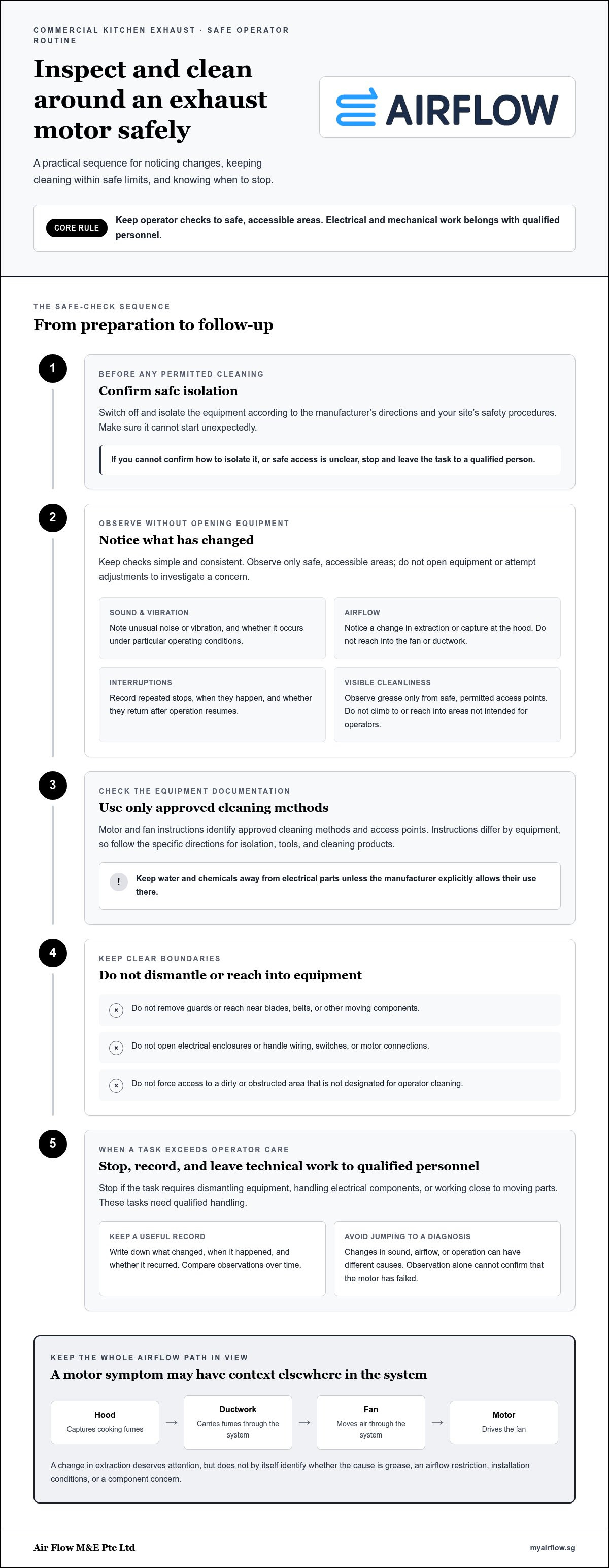
Routine observation helps kitchen staff notice changes, but it isn’t a substitute for electrical or mechanical work. Keep operator checks to areas that are safe and accessible. A motor, fan and exhaust system can contain electrical connections and moving parts, so don’t open equipment or attempt adjustments to investigate a concern.
Before cleaning any area that the equipment instructions permit, switch off and isolate the equipment according to the manufacturer’s directions and your site’s safety procedures. Make sure it can’t start unexpectedly. If you can’t confirm how to isolate it or safe access isn’t clear, stop and leave the task to a qualified person.
Operator checks that help catch changing conditions
Keep observations simple and consistent. Note what changed, when it happened and whether it recurred. This record can help distinguish a one-off change from a pattern without treating any symptom as a confirmed fault.
- Sound and vibration: Record unusual noise or vibration, including whether it occurs under particular operating conditions.
- Airflow: Note a noticeable change in extraction or capture at the hood. Don’t reach into the fan or ductwork.
- Interruptions: Record repeated stops or interruptions, when they occur and whether they return after operation resumes.
- Visible cleanliness: Observe grease accumulation only from safe, permitted access points. Don’t climb to or reach into areas not intended for operator access.
Compare notes over time. Changes in sound, airflow or operation can have different causes, so don’t conclude from observation alone that the motor has failed.
Cleaning boundaries that protect people and equipment
Use the motor and fan documentation to identify approved cleaning methods and access points. Instructions differ by equipment. If cleaning is permitted, follow the directions on isolation, tools and cleaning products. Keep water and chemicals away from electrical parts unless the manufacturer explicitly allows their use there.
- Don’t remove guards or reach near blades, belts or other moving components.
- Don’t open electrical enclosures or handle wiring, switches or motor connections.
- Don’t force access to a dirty or obstructed area if it isn’t designated for operator cleaning.
Stop if the task requires dismantling equipment, handling electrical components or working close to moving parts. These tasks need qualified handling, not a more thorough operator clean. The NFPA 96 Standard for Commercial Cooking Operations is a reference for commercial cooking exhaust and fire protection. Apply relevant requirements based on current guidance for your premises.
Safe checks and clear records support extending the lifespan of a commercial exhaust motor by helping identify changes without taking unnecessary risks. For a commercial exhaust system requirement, explore Air Flow M&E’s commercial exhaust system services.
Does Cleaning Alone Extend Commercial Exhaust Motor Life?
Cleaning may address grease or other contamination, but it can’t correct every motor or airflow issue. If visible buildup affects an accessible area, cleaning it according to approved instructions may help restore that area’s condition. If a concern remains or returns, repeating the clean without investigating further may delay attention to another cause.
Operator cleaning can address permitted, visible contamination. Qualified diagnosis is needed to assess suspected electrical, mechanical or system faults. A change in extraction after cleaning is useful information, but it doesn’t prove what caused the change or confirm that the motor is operating correctly.
Match the response to the likely source of the problem
Use observations to decide what response is appropriate, not to diagnose the equipment yourself. The same symptom can have more than one possible explanation. Stay within operator-safe tasks and manufacturer guidance, then note whether conditions change.
- Visible contamination: Clean only areas and components the manufacturer permits operators to access. Record whether extraction or other observed conditions change afterwards.
- Possible airflow restriction: Consider the hood, filters, fan and duct route as connected parts. A visible issue at one point may not explain the performance of the full system.
- Suspected electrical or mechanical concern: Stop operator intervention. Don’t open the motor, adjust components or attempt a repair. Arrange a qualified assessment.
For example, if a permitted clean is completed but a performance concern persists, more cleaning may not be the right next step. Record what you observed and what changed, then arrange an assessment rather than assuming the motor is at fault.
When motor care points to a wider system issue
Recurring concerns may warrant reviewing the exhaust system layout and whether its components suit the kitchen’s operating requirements. A symptom alone doesn’t prove a specific defect or compliance failure. An assessment should consider the motor, fan, hood and ductwork before determining whether the issue calls for a system alteration or different equipment.
Extending the lifespan of a commercial exhaust motor isn’t simply a matter of cleaning more often. Respond proportionately: remove permitted contamination, track what happens next and escalate persistent or concerning changes for qualified assessment. For wider HVACR industry coverage, see The ACHR News.
A replacement decision should follow an understanding of the operating concern and the system context, rather than being based on cleaning results alone. The commercial exhaust motor replacement guide covers that decision as a separate topic.
A Repeatable Maintenance Routine for Longer Commercial Exhaust Motor Service
A useful routine doesn’t need complex maintenance tasks. It needs to make observations consistent, keep permitted cleaning within safe limits and identify when a concern persists. This helps staff distinguish a normal operating variation from a change that needs attention, without treating a log entry as a technical diagnosis.
Use a simple sequence:
- Observe: Note the system’s operation and any noticeable changes in airflow, sound, vibration or interruptions.
- Record: Write down what staff noticed, when it happened and the kitchen’s operating conditions at the time.
- Clean permitted areas: Follow manufacturer instructions and site safety procedures. Don’t turn operator cleaning into dismantling or adjustment.
- Compare: Check whether the condition changes after permitted cleaning or differs from previous observations.
- Escalate: If a concern persists, worsens or involves electrical or mechanical operation, use qualified technical advice to guide the next step.
Set check frequency according to the motor and fan manufacturer’s guidance, kitchen duty and observed conditions. A kitchen with extended operating hours or changing workloads may need a different approach from one with lighter use. Avoid applying a universal interval when the equipment instructions and actual operating conditions should guide the routine.
Build a practical kitchen exhaust check log
Choose a consistent place to record checks, such as a site log used across shifts. Assign a staff member to keep entries current and flag follow-up items so observations don’t get lost between teams. A short, factual record is more useful than an assumed diagnosis.
- Record the date, operating pattern and visible condition from safe, permitted access points.
- Describe the change in plain terms, such as “airflow seemed weaker during service,” rather than labelling it a motor fault.
- Note any approved cleaning completed, the result observed and whether follow-up is needed.
- Document qualified technical work separately, including the concern assessed and any actions recommended.
Use operating changes to decide when to escalate
Compare new notes with earlier entries. Persistent or worsening changes in airflow, vibration, noise or interruptions deserve attention rather than repeated restarting or cleaning alone. Don’t reset or bypass protections to keep equipment running. Follow the manufacturer’s instructions and qualified technical advice when deciding what happens next.
Consistent records can support decisions about the system as a whole. Consider hood and motor performance together, particularly if the layout or kitchen requirements have changed. The commercial kitchen hood installation guide explains hood considerations relevant to exhaust system planning. A wider operational concern may warrant an assessment of the motor, fan, hood and ductwork, or a system Addition & Alteration.
Extending the lifespan of a commercial exhaust motor starts with a routine staff can maintain and a clear threshold for escalating concerns. If an operating issue suggests the exhaust system needs a closer look, explore commercial exhaust system services.
When Commercial Exhaust Motor Lifespan Requires Professional System Attention
Some operating changes call for more than another cleaning. If airflow remains poor after permitted cleaning, or unusual noise, vibration or interruptions continue or worsen, arrange a qualified technical assessment. These signs don’t identify the cause on their own, but they do indicate that repeated operator intervention may not be the right response.
Help a technical review by describing what’s happening clearly and avoiding actions that could make the condition harder to evaluate. Share observations and check records, including when the concern began, whether it appears under particular operating conditions and what changed after approved cleaning. This gives the review useful context without presenting staff observations as a diagnosis.
What a system-level assessment should consider
A useful assessment looks at how the installed components work together, rather than treating the motor as an isolated part. It can consider the motor and fan alongside the hood arrangement, ductwork configuration and the kitchen’s actual use. Operating patterns matter because equipment serving long or demanding kitchen schedules faces different conditions from equipment used less intensively.
For example, a persistent change in extraction may warrant reviewing the airflow route and system arrangement as well as the motor and fan. The symptom doesn’t prove that any one component is defective, that the layout is unsuitable or that a compliance failure has occurred. Findings should be understood in the context of site conditions and project requirements.
That measured approach is central to extending the lifespan of a commercial exhaust motor: understand what the system needs before deciding what work is appropriate. No lifespan extension can be promised before the equipment, installation and operating requirements are understood.
When installation or A&A may be the appropriate next step
If findings point to a project requirement, commercial exhaust motor installation or exhaust-system Addition & Alteration (A&A) may be relevant. The right scope depends on the system’s needs. Motor installation addresses equipment provision and integration, while A&A can address changes to an existing exhaust arrangement. Custom-fitted ductwork may also form part of a solution for a commercial food-service layout.
These works address defined project requirements. They aren’t a guaranteed cure for every sound, airflow change or interruption, and a symptom alone doesn’t establish that replacement or modification is needed. A system-wide view connects the identified concern to an appropriate scope rather than assuming that changing the motor will resolve an issue elsewhere in the exhaust path.
If you’re weighing a replacement decision, the commercial kitchen exhaust motor replacement reference is a separate resource to consider alongside site-specific requirements.
For commercial exhaust motor installation or system A&A, discuss your commercial kitchen exhaust requirements with Air Flow M&E Pte Ltd.
Make Your Next Exhaust System Decision with Confidence
Turn operating observations into a clear project brief. Note what has changed, how the kitchen is being used and whether the issue persists. That context can help shape a system discussion around actual requirements instead of assumptions about the motor alone.
Extending the lifespan of a commercial exhaust motor isn’t about promising a fixed service life. It means making informed decisions as operating needs change. Air Flow M&E Pte Ltd provides commercial exhaust motor installation, kitchen exhaust system Addition & Alteration services and custom-fitted ductwork. These services address project requirements across the connected exhaust system.
For a new installation or changes to your existing setup, discuss your commercial kitchen exhaust project with Air Flow M&E Pte Ltd. A clear understanding of your system’s needs is a practical place to start.
Frequently Asked Questions
How often should a commercial exhaust motor be inspected?
Follow the inspection and care guidance supplied for the specific motor and fan rather than applying one interval to every kitchen. Operating hours, cooking patterns and changes in performance can affect how closely equipment needs attention. Staff can note visible or operational changes during routine site checks, while technical inspection should follow manufacturer instructions and applicable requirements. For extending the lifespan of a commercial exhaust motor, consistent observations are more useful than an arbitrary schedule.
How long does a commercial kitchen exhaust motor usually last?
There isn’t one dependable lifespan figure that applies to every commercial kitchen exhaust motor. Service life varies with the equipment, its suitability for the application, installation conditions and workload. An older motor isn’t automatically at the end of its useful life, and a newer one isn’t automatically free from problems. Consider operating history and current performance together, then use a qualified assessment to inform decisions rather than relying on age alone.
Can grease buildup damage an exhaust motor?
Grease buildup doesn’t automatically mean the motor itself is damaged. Deposits on accessible parts of the fan or exhaust system may affect cleanliness or airflow, which can change how the system operates. The location and extent of contamination matter. If cleaning permitted areas doesn’t resolve an operating change, or grease is present where staff can’t safely access it, don’t assume the motor is the cause. Have the condition assessed appropriately.
What are the signs that a commercial exhaust motor needs attention?
Changes worth recording include new or increasing vibration, unusual humming or rattling, reduced extraction at the hood, repeated interruptions, or a motor that behaves differently from its usual pattern. None of these signs identifies a specific fault by itself. Note when it occurs and whether it recurs under similar kitchen conditions. If operation becomes erratic or a concern persists, avoid repeated restarts and arrange a qualified assessment instead of guessing at the cause.
Can a commercial exhaust motor run continuously?
Only if the specific motor and exhaust system are intended for the kitchen’s operating pattern. Check the manufacturer’s documentation for the motor’s duty rating and operating instructions. Don’t assume every model is suitable for uninterrupted operation. Actual use and installation conditions also matter. If the fan runs continuously when the kitchen’s process doesn’t call for it, or its operating pattern changes unexpectedly, record the circumstances and seek technical advice rather than changing controls yourself.
Does cleaning the exhaust fan improve motor performance?
Cleaning may help system operation if permitted methods remove contamination affecting the fan. But cleaning can’t correct every airflow, electrical or mechanical concern, and a change after cleaning doesn’t confirm the motor’s condition. Compare performance before and after the task, using only approved access and methods. If the same concern remains, don’t rely on repeated cleaning as the only response. A technical assessment can help determine whether the issue lies with the fan, motor or wider system.
When should a commercial exhaust motor be replaced instead of maintained?
Consider replacement when a qualified assessment finds that the motor’s condition or suitability no longer meets the project’s operating requirements. Age or one unusual sound alone isn’t enough to establish that replacement is necessary. The review should account for the fan and wider exhaust arrangement, since changing the motor may not address a concern elsewhere. If installation or system changes are indicated, commercial exhaust motor installation or exhaust-system Addition & Alteration may be relevant next steps.
For help with commercial exhaust motor installation or an exhaust system Addition & Alteration, contact Air Flow M&E Pte Ltd to discuss your project.


