

A scrubber’s purchase price is only part of its cost. The treatment technology also determines the maintenance involved. A kitchen exhaust air scrubber in Singapore may use electrostatic collection, UV-C with ozone, or activated carbon to address grease, smoke and odour. Operating and upkeep costs depend on the system configuration, duct layout, energy use and cleaning needs. Installation pricing is provided after a quote request.
Choosing a system is about more than removing visible smoke. Grease buildup, lingering odours and filter condition all affect exhaust performance over time. Understanding the differences between scrubber technologies helps you compare options and anticipate their maintenance needs.
This guide explains how scrubbers capture or treat cooking fumes, which specifications matter when comparing systems, and what influences maintenance and operating costs. It also compares electrostatic precipitators, UV systems and wet scrubbers, so you can understand what each approach does and where it may fit in a commercial kitchen.
Key Takeaways
- Compare scrubbers by the pollutants they target and the treatment method they use, not by equipment type alone.
- Understand how grease, smoke and odour are captured or treated before exhaust air is discharged.
- Assess upkeep and operating costs through system configuration, cleaning needs, energy use and duct layout.
- Learn how electrostatic precipitators, UV systems and wet scrubbers differ in operation and maintenance demands.
- See how hood installation, exhaust motor installation and custom-fitted ductwork can support a commercial kitchen exhaust system.
Cooking fume and smoke removal
Cooking emissions vary with the menu, cooking method and ingredients. Frying produces oil droplets and smoke, boiling releases water vapour, and grilling can create visible smoke and persistent odour. A kitchen exhaust air scrubber in Singapore treats these pollutants as part of the exhaust system. It does not replace the hood, which captures fumes at their source.
The hood captures rising fumes and directs them into the exhaust path. The scrubber then targets pollutants before the air is discharged. Kitchen exhaust electrostatic air cleaners are described as capturing oil, grease, water vapour, odour and smoke. This range matters because visible smoke is only one part of the emissions from a busy cooking line.
Electrostatic collection can capture airborne grease and smoke particles, which remain inside the cleaner until removed during maintenance. If collection surfaces become coated with residue, their ability to capture particles can be affected. Their condition is therefore important to both air treatment and routine upkeep.
Odour treatment works differently. Activated carbon filters remove odour compounds through adsorption, meaning the compounds adhere to the carbon’s surface. This targets smells that may remain after visible particles have been captured. Carbon condition and exposure to the exhaust stream affect how well the filter continues to perform.
UV-C and ozone can also treat kitchen exhaust. Their combined action is described as oxidising oil and grease and deodorising exhaust air before discharge. This differs from a carbon filter, which adsorbs odour compounds, and an electrostatic cleaner, which captures particles. Treatment stages should match the emissions produced by the cooking operation.
Some systems add HEPA filtration to capture fine particles. The stated capture size is down to 0.3 microns. That specification describes particle capture, not odour removal, so it serves a different purpose from activated carbon. A system may combine technologies when one treatment stage cannot address every exhaust concern.
- Visible smoke: particle capture helps reduce smoke carried through the exhaust stream.
- Grease: electrostatic collection or UV-C with ozone addresses airborne oil and grease through different processes.
- Odour: activated carbon adsorbs odour compounds, while UV-C with ozone deodorises exhaust air.
- Fine particles: HEPA filtration is described as capturing particles down to 0.3 microns.
Food businesses should understand the intended role of the equipment. Kitchen exhaust air cleaner systems are described as intended to meet SFA requirements before a food licence is issued or renewed. The treatment method, hood capture and exhaust path work together. Matching them to the cooking process helps clarify which pollutants the system addresses.
Maintenance and operating costs
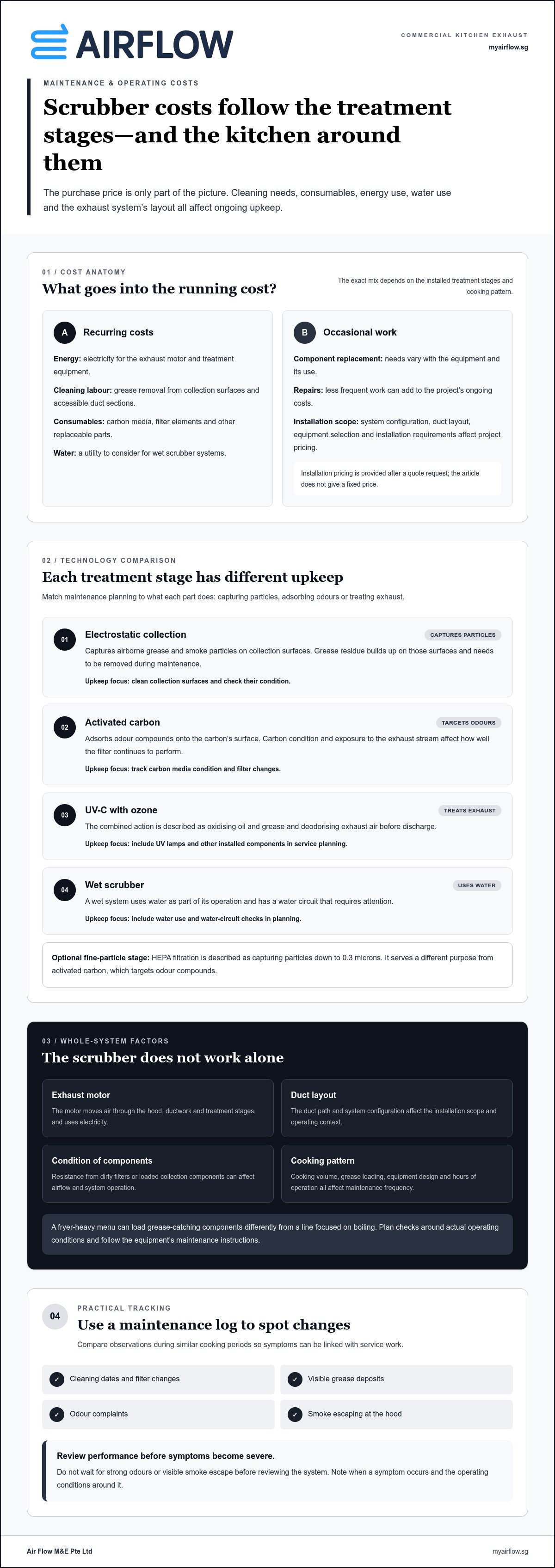
The running cost of a kitchen exhaust scrubber involves more than electricity. Filters, collection plates, UV components, water use and cleaning labour can all affect upkeep. The exact mix depends on the treatment stages installed and the kitchen’s cooking pattern. A fryer-heavy menu, for example, can load grease-catching components differently from a line focused on boiling.
Start by identifying every consumable and serviceable component. An electrostatic unit has collection surfaces that need cleaning as grease accumulates. An activated carbon stage relies on filter media to adsorb odours. A UV-C system uses lamps, while a wet scrubber uses water and requires attention to its water circuit. Each design has different replacement, cleaning and utility needs.
Energy use depends on the equipment operating alongside the scrubber. The exhaust motor moves air through the hood, ductwork and treatment stages. Resistance from dirty filters or loaded collection components can affect airflow and system operation. Consider the scrubber alongside the motor and duct path, rather than treating it as a standalone appliance.
Use a maintenance log to link operating symptoms with service work. Record cleaning dates, filter changes, visible grease deposits, odour complaints and smoke escaping at the hood. Compare observations during similar cooking periods. If odour returns after a carbon filter change, note whether it occurs with particular menu items or operating conditions. These details help narrow down the cause.
- Consumables: track carbon media, filter elements and other replaceable parts.
- Cleaning: record grease removal from collection surfaces and accessible duct sections.
- Utilities: consider electricity for the motor and treatment equipment, plus water for wet systems.
- Performance: note changes in capture, airflow, smoke and odour after maintenance.
Maintenance frequency depends on cooking volume, grease loading, equipment design and hours of operation. A kitchen that fries frequently may need closer attention to grease-bearing components than one with lighter cooking. Follow the equipment’s maintenance instructions and plan checks around actual operating conditions. Do not wait for strong odours or visible smoke escape before reviewing the system.
For budgeting, separate recurring costs from occasional work. Recurring items include energy, cleaning labour and consumables; less frequent work can include component replacement or repairs. A project price depends on the case and is given after a quote request, with system configuration, duct layout, equipment selection and installation requirements affecting the scope. Reviewing the commercial exhaust system layout can help clarify which components influence future upkeep.
Compare options by their total ownership needs, not purchase price alone. A system with several treatment stages may address different pollutants, but each stage adds maintenance tasks. Consider access for cleaning, consumable availability and the labour needed to service components. These practical details determine how manageable the system is during routine kitchen operations.
Scrubber operating principles
A kitchen exhaust scrubber treats air travelling from the hood towards discharge. The exhaust motor moves fumes through connected ductwork and treatment sections, each of which acts on a different feature of the airstream. A particle collector, UV-C chamber and carbon stage therefore perform separate jobs, even when installed together.
An electrostatic precipitator uses an electrical field to collect airborne particles. It charges particles, then moves them onto positively charged collection plates or surfaces. Grease and smoke particles can then be retained inside the unit instead of continuing through the exhaust path. The principle is particle capture, not odour adsorption or microbial treatment.
UV-C treatment uses exposure to ultraviolet light, rather than trapping particles on a plate. In kitchen exhaust applications, UV-C combined with ozone is also described as oxidising oil and grease and deodorising air before discharge.
Activated carbon relies on adsorption. Odour compounds adhere to the carbon’s surface as exhaust passes through the filter. This process depends on contact between the air and the carbon media. A carbon stage therefore treats odour compounds differently from an electrostatic collector, which captures particles through an electrical process.
A wet scrubber brings exhaust into contact with liquid. Pollutants can transfer from the airstream into the liquid, which then needs to be managed as part of the system. Water circulation and separation are central to this method. It differs from a dry filter, where contaminants collect on a solid surface or within filter media.
Airflow connects these principles. The hood must capture cooking emissions, and the motor must move air through the duct and treatment equipment. If the treatment section restricts airflow, capture at the hood can be affected. System design therefore treats the hood, duct route, scrubber resistance and exhaust motor as connected components.
- Electrostatic collection: charges airborne particles and directs them to collection plates or surfaces.
- UV-C and ozone: uses light and oxidation processes for the functions described above.
- Activated carbon: adsorbs odour compounds onto carbon media.
- Wet scrubbing: brings exhaust into contact with liquid for pollutant transfer.
These mechanisms explain why a scrubber’s label alone says little about its treatment scope. An electrostatic unit targets particles, while carbon targets odour compounds. A combined arrangement can place different processes along one exhaust route. The sequence and airflow need to suit the cooking operation and equipment layout.
What types of kitchen exhaust air scrubbers are available in Singapore?
Commercial kitchens in Singapore can compare scrubbers by treatment method. Common categories include electrostatic precipitators, UV-C systems, activated carbon filters, HEPA filters and wet scrubbers. Some installations combine stages because each method addresses different exhaust concerns. Start by considering the cooking process, then identify the pollutants needing treatment and assess the available duct layout.
Electrostatic precipitators charge airborne particles and direct them onto collection plates or surfaces. They target particles, including oil and grease carried in cooking exhaust. A kitchen with frying equipment may produce grease-laden fumes, making collection performance and cleaning access important comparison points. The plates need regular cleaning as captured material accumulates.
UV-C systems use ultraviolet light as a treatment stage. In kitchen exhaust applications, UV-C with ozone is described as oxidising oil and grease and deodorising exhaust air before discharge. This differs from a particle collector, which captures particles on surfaces. Compare the proposed system’s treatment function with the kitchen’s cooking methods and consider how its components fit into the exhaust path.
Activated carbon filters target odour compounds through adsorption. The compounds adhere to the carbon surface as exhaust passes through the media. This method addresses odour and does not replace grease capture. Where lingering smells are a concern, carbon can be considered alongside another treatment stage, taking filter access and replacement needs into account.
HEPA filters are described as capturing fine particles down to 0.3 microns. That specification refers to particle capture, not odour treatment. It helps distinguish HEPA filtration from activated carbon, which adsorbs odour compounds. Consider the filter’s role within the complete exhaust design, rather than treating its particle rating as a measure of every scrubber function.
Wet scrubbers bring exhaust into contact with liquid so pollutants can transfer from air into the liquid. Their operation therefore involves water handling alongside exhaust treatment. Compare this with dry approaches, such as electrostatic collection or carbon media. The system’s operating demands, maintenance access and fit with the kitchen layout all matter in Singapore’s commercial premises.
- For airborne particles: compare electrostatic collection and HEPA filtration by their distinct roles.
- For odour: consider activated carbon adsorption or UV-C with ozone treatment.
- For combined treatment: assess how multiple stages address separate pollutants along one exhaust route.
- For equipment planning: account for hood capture, motor capacity, duct routing and scrubber access.
A kitchen exhaust air scrubber in Singapore should be evaluated as part of the hood, motor and duct system. A fryer-led menu, for example, may place greater emphasis on grease handling, while an odour-sensitive location may call for attention to deodorising stages. Compare treatment scope, airflow compatibility and routine servicing needs together. This makes the differences between scrubber types clearer before selecting a system configuration.
How do electrostatic precipitators, UV systems, and wet scrubbers compare for kitchen exhaust?
These three technologies treat kitchen exhaust differently. An electrostatic precipitator captures charged particles on collection surfaces. A UV-C system uses light as part of a treatment process. A wet scrubber brings exhaust into contact with liquid. Compare each method with the cooking emissions, duct arrangement and maintenance requirements.
Electrostatic precipitators: The unit charges airborne particles, then moves them onto positively charged collection plates or surfaces. This makes it a particle-capture method for exhaust containing grease and smoke particles. The plates hold collected material, so their condition matters over time. For a kitchen with frequent frying, grease accumulation and access for cleaning are practical considerations.
UV systems: UV-C light disrupts the DNA or RNA of airborne microorganisms, rendering them unable to reproduce. In kitchen exhaust treatment, UV-C combined with ozone is also described as oxidising oil and grease and deodorising exhaust air before discharge. It works differently from a precipitator. Compare its intended treatment role and components with the emissions produced by the kitchen.
Wet scrubbers: These systems bring exhaust into contact with liquid, allowing pollutants to transfer from the air into the liquid. Water handling is therefore part of system operation. This differs from the dry collection surfaces of an electrostatic unit. The kitchen layout, access for servicing and provision for managing the liquid all influence whether this approach fits.
- Choose electrostatic collection when particle capture is a priority and collection plates can be serviced.
- Consider UV-C with ozone for the described oxidation and deodorising functions.
- Assess wet scrubbing when liquid-based treatment suits the exhaust and site arrangement.
No single label describes every treatment need. A fryer-led operation may focus on grease and smoke particles, while a kitchen concerned about lingering odours may also consider deodorising stages. A combined system can use more than one method, with each stage addressing a different part of the exhaust. Its sequence should work with the hood, duct route and exhaust motor.
Compare maintenance needs alongside treatment function. Electrostatic plates need cleaning as captured material builds up. UV equipment has treatment components that require attention. Wet scrubbers involve water-system upkeep. These tasks affect access planning and routine service work. Equipment that is difficult to reach can complicate maintenance, even when its treatment method suits the cooking process.
For an existing kitchen, consider whether the hood captures fumes effectively and whether the exhaust path accommodates the selected treatment. Changes to the duct route or motor can affect the whole system’s airflow. If an existing commercial setup needs alterations to suit a revised exhaust arrangement, review commercial kitchen exhaust system additions and alterations as a practical next step.
Air Flow M&E Pte: Commercial Kitchen Hood Installation
Air Flow M&E Pte provides commercial kitchen hood installation for businesses planning a new kitchen or changing their exhaust layout. A hood must work with the exhaust motor and duct route to capture cooking fumes and move them through the system. When renovation changes the cooking equipment or kitchen layout, consider these components together.
Air Flow M&E Pte also installs commercial exhaust motors and provides custom-fitted ductwork. These services help address the exhaust path around a commercial kitchen. If your project involves a new hood or changes to existing exhaust arrangements, discuss the project with Air Flow M&E Pte.
Contact Air Flow M&E Pte to discuss your commercial kitchen exhaust project.
Plan the Exhaust System Around the Kitchen
Your next step is to match equipment choices to the kitchen’s actual layout and operating needs. A kitchen exhaust air scrubber in Singapore should fit into an exhaust path that supports hood capture, suitable airflow and practical maintenance access. Consider these requirements before changing equipment or renovating the cooking area.
Air Flow M&E Pte Ltd supports commercial projects through Kitchen Exhaust System Addition & Alteration (A&A) Services, Commercial Kitchen Hood Installation and Commercial Exhaust Motor Installation. These services are relevant when a new setup or changes to existing equipment call for coordinated exhaust-system work. The project requirements determine the appropriate scope.
Bring your kitchen layout and planned changes into the discussion with Air Flow M&E Pte Ltd. This gives the project a clear starting point for coordinating the hood, motor and exhaust route.
Contact Air Flow M&E Pte Ltd to discuss your commercial kitchen exhaust project. A considered plan is a practical step toward a system that suits your operation.
Frequently Asked Questions
What is a kitchen exhaust air scrubber and how does it work?
A kitchen exhaust air scrubber treats cooking emissions as they travel through an exhaust system. The treatment method determines what it targets: electrostatic equipment captures particles, activated carbon adsorbs odour compounds, and UV-C with ozone can oxidise oil and grease. For example, a kitchen with visible smoke and lingering smells may need different treatment functions. Compare those functions with the cooking process, rather than relying on the word “scrubber” alone.
How much does a kitchen exhaust air scrubber cost in Singapore, including installation and maintenance?
The total cost depends on the system design and installation work required. Equipment choice, hood and duct arrangement, exhaust motor requirements, electrical work, installation access, consumables and cleaning labour can all affect project and ongoing expenses. Installation pricing is provided after a quote request. For budgeting, separate one-time installation work from recurring electricity, water where relevant, filter replacements and maintenance labour.
When is an air scrubber required for a restaurant or commercial kitchen in Singapore?
A scrubber should not be assumed to be a universal requirement for every restaurant. Relevant licensing and exhaust needs depend on the premises and its operating conditions. Kitchen exhaust air cleaner systems are described as intended to meet SFA requirements before a food licence is issued or renewed. Treat scrubber selection as part of planning the kitchen’s exhaust and licensing needs, rather than assuming one device alone determines compliance.
Which companies supply and install kitchen exhaust air scrubbers in Singapore?
Air Flow M&E Pte Ltd provides commercial kitchen exhaust system addition and alteration services, hood installation, exhaust motor installation and custom-fitted ductwork. These services support commercial exhaust projects where the hood, motor and duct route need coordinated work. For a scrubber project, distinguish the scrubber itself from the exhaust-system installation. Air Flow M&E’s services cover the commercial exhaust components described here.
What maintenance schedule and replacement costs are typical for kitchen exhaust air scrubbers?
Maintenance timing depends on the scrubber type, cooking volume and grease loading. Use the equipment instructions and operating conditions to plan inspections. Check collection surfaces for buildup, inspect carbon media if odour control weakens, and review UV components as part of servicing. Replacement costs depend on the parts, access and labour involved. Keep records of cleaning, replaced components and changes in smoke or odour to support practical maintenance planning.
What are common problems and safety risks with kitchen exhaust air scrubbers?
Common problems include grease buildup on collection surfaces, loaded filters, returning odours, smoke escaping the hood and reduced airflow. Regular cleaning and maintenance help keep the system performing as intended.


