

Excessive vibration from a kitchen exhaust fan is more than a noise problem. It can point to an unbalanced or damaged fan wheel, loose mounting hardware, worn bearings, or vibration transmitted through the ductwork. Left unchecked, the shaking can strain components and affect system efficiency.
A rattling panel or low hum may seem minor, but the source could be inside the fan or elsewhere in the exhaust system. Identifying the cause matters because the right fix depends on which component is loose, worn, dirty, or transmitting vibration.
This article covers common causes, signs that help distinguish them, and how grease buildup, alignment, and duct connections can contribute. It also explains which components may need attention and when commercial exhaust fan or ductwork work may be the practical next step.
Key Takeaways
- Rattling can come from loose panels, dampers, or duct connections, not just the fan itself.
- Uneven grease on fan blades can affect balance; clean filters and blades according to the equipment manufacturer’s recommendations.
- Fan alignment and clearance matter: contact between the wheel and its housing can create noise and vibration.
- Vibration can travel through ductwork and building structures, so the sound may be noticeable beyond the kitchen.
Correcting loose hardware, worn bearings, and damaged blades
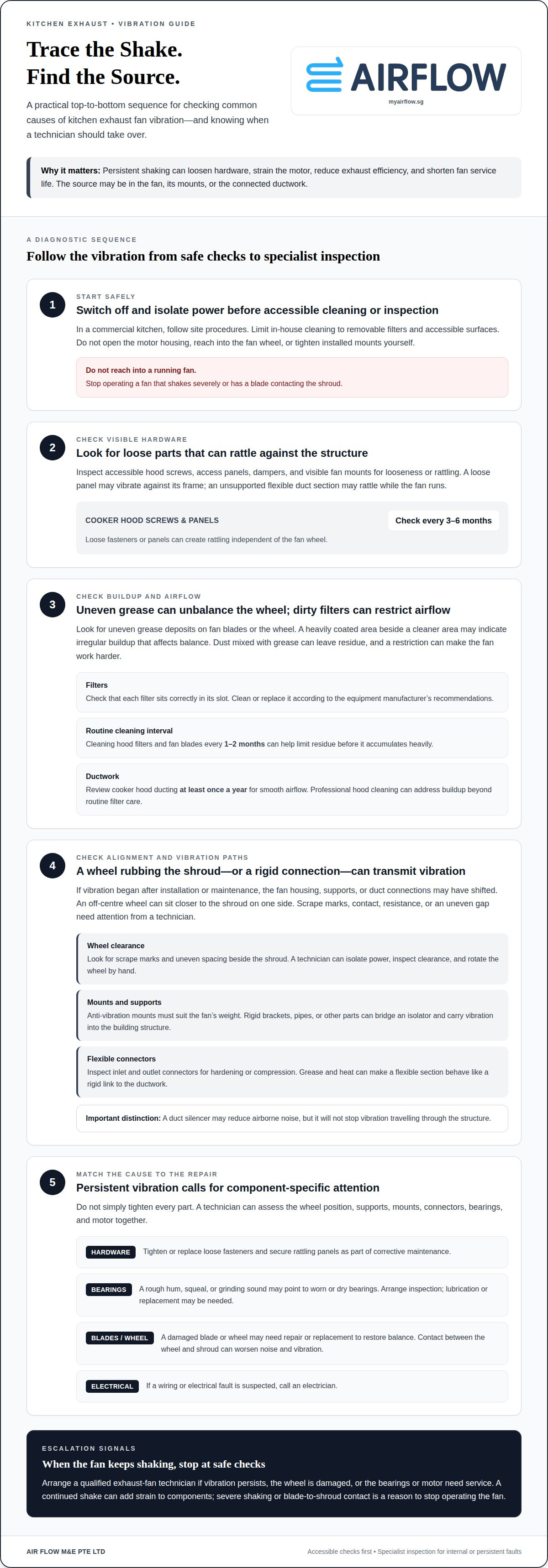
Excessive vibration from a kitchen exhaust fan can start with a loose fastener or an unbalanced fan wheel. Grease that collects unevenly on commercial fan blades can throw the wheel off balance, making it shake as it rotates. A damaged blade or a wheel rubbing against the fan shroud can add noise and worsen the vibration.
Start diagnosis with the accessible parts. Inspect the hood screws, access panels, dampers, and visible fan mounts for looseness or rattling. Check cooker hood screws and panels every 3–6 months. A loose panel can vibrate against its frame, while an unsupported flexible duct section can rattle as the fan runs.
In a commercial kitchen, limit in-house cleaning to removable filters and accessible surfaces. Follow site procedures to switch off and isolate the fan from power first. Don’t open the motor housing, reach into the fan wheel, or tighten installed mounts yourself.
Worn or dry bearings need attention. They may cause a rough hum, squeal, or grinding sound, while excess fan movement puts additional stress on the motor and can accelerate bearing wear. Corrective maintenance may include tightening mounting hardware, lubricating or replacing bearings as needed, repairing or replacing damaged blades, and inspecting the motor.
Call an electrician if you suspect a wiring or electrical fault, and a qualified exhaust-fan technician if vibration persists, the wheel is damaged, or the bearings or motor need service. Stop operating a fan that shakes severely or has a blade contacting the shroud. Continued operation can increase strain on its components.
- Loose hardware: Tighten or replace loose fasteners and secure rattling panels.
- Worn bearings: Arrange inspection when noise or rough rotation points to bearing wear.
- Damaged blades: Repair or replace the affected blade or fan wheel to restore balance.
Grease and dust buildup restricting airflow
Grease can collect unevenly on fan blades and throw the wheel off balance. As the wheel turns, this uneven loading can cause vibration and noise. Dust mixed with grease can leave residue on blades and nearby surfaces, while buildup in filters restricts airflow through the hood.
Dirty grease filters can reduce airflow efficiency and contribute to noise. Check that each filter sits correctly in its slot, since incorrect installation can also disrupt airflow. Clean or replace filters according to the manufacturer’s recommendations. For a planned routine, cleaning hood filters and fan blades every 1–2 months can help limit residue before it accumulates heavily.
Look for uneven grease deposits on the fan wheel, rather than only a thick layer across every blade. A heavily coated section beside a clean area may indicate irregular buildup and a possible balance problem. If cleaning accessible parts doesn’t stop the shaking, the wheel may need inspection for deposits, damage, or contact with the fan shroud.
Duct condition matters too. A restriction can reduce airflow and make the fan work harder, while grease deposits may accumulate along the duct route. Review cooker hood ducting at least once a year to check for smooth airflow. Professional hood cleaning can remove buildup beyond the reach of routine filter care. Keep maintenance to accessible parts, and isolate equipment from power before cleaning.
- Filters: Check seating and clean or replace them as the manufacturer directs.
- Blades: Look for uneven deposits that may affect wheel balance.
- Ductwork: Include its airflow condition in the annual review.
If vibration continues after accessible grease is removed, a commercial kitchen exhaust system assessment can help identify whether the fan or ductwork needs attention.
Checking fan alignment and friction
A commercial kitchen exhaust fan operating properly should run smoothly, without noticeable shaking or rattling. If vibration starts after installation or maintenance, check whether the fan housing, supports, or duct connections have shifted. An off-centre wheel may sit closer to the fan shroud on one side, causing a rubbing noise as it turns.
Friction can leave visible scrape marks on the wheel or shroud. With the equipment isolated from power, a technician can inspect the clearance around the fan wheel and rotate it by hand. Contact, resistance, or an uneven gap signals a problem that needs correction before normal operation resumes. Don’t reach into a running fan.
Mounts affect how vibration travels. Anti-vibration mounts must suit the fan’s weight and remain free to move. If a rigid bracket, pipe, or other component bridges a mount, vibration can bypass the isolator and enter the building structure. If a fan became noisy after repair, a mount may have been bridged during the work.
Inspect the fan’s flexible connectors at the inlet and outlet. They help limit vibration transfer into the duct run, but grease and heat can harden them. A hardened connector can behave like a rigid link, carrying vibration into the ductwork. Look for connectors that no longer flex or appear compressed against nearby parts.
- Wheel clearance: Check for scrape marks and uneven spacing beside the shroud.
- Mounts: Confirm isolators support the fan without rigid parts bypassing them.
- Connectors: Look for hardened or compressed flexible sections at duct connections.
Correct alignment by addressing the source, not by simply tightening every part. A technician assesses the wheel position, supports, mounts, and connectors together. This distinction matters: a duct silencer can reduce airborne noise, but it won’t stop vibration travelling through the structure.
Effects of excessive exhaust fan vibration
Persistent vibration can do more than make a kitchen noisy. It can loosen mounting hardware, strain the motor, reduce exhaust efficiency, and shorten the fan’s service life. For example, a loose support may let the fan move more with each rotation, placing additional stress on connected parts.
Vibration can travel beyond the fan. Ductwork may carry noise back to the hood, while contact between a duct and a ceiling hanger can transmit it through the building. If vibration can be felt three metres away in the structure, that points to structure-borne noise. A neighbour two floors up may hear noise re-radiated through another room.
Systems designed for quieter operation and less vibration are matched to the hood’s airflow needs, with the fan correctly sized for the system and anti-vibration mounts selected for its weight. Flexible connectors at the fan inlet and outlet help limit vibration transfer into ductwork. A silencer may reduce airborne noise, but it won’t resolve vibration travelling through a slab.
In an HDB flat or condominium, repair and replacement work should follow the property’s applicable requirements. Before changing a fan or duct route, check with the relevant building management or HDB channels about approvals, especially if the work affects shared ducts or the building structure. Requirements depend on the property and the proposed work.
Lowering fan speed isn’t a reliable fix if it reduces capture below what the cooking line needs. Inadequate capture can allow smoke and grease to accumulate in the ductwork. The right response is to identify whether vibration comes from the fan, its supports, or the duct path.
- Watch for: worsening rattles, loose supports, or vibration spreading through the building.
- Act on the cause: match fan selection, mounts, and connections to system requirements.
For persistent commercial exhaust vibration, discuss commercial exhaust motor installation as part of addressing the fan and its system connections.
Air Flow M&E Pte
Air Flow M&E Pte Ltd helps commercial kitchen operators address exhaust-system needs when persistent vibration points to the hood, motor, or ductwork. Its Commercial Kitchen Hood Installation, Commercial Exhaust Motor Installation, and Custom-fitted Ductwork services support projects involving these components. For system changes, its Commercial Kitchen Exhaust System Addition & Alteration services may also be relevant.
Turn to Air Flow M&E Pte Ltd when the issue involves installing or altering commercial exhaust equipment, rather than routine cleaning or a loose, accessible panel. Share where you feel the vibration, what sounds accompany it, and whether it began after work on the system. Contact Air Flow M&E Pte Ltd to discuss your commercial kitchen exhaust requirements.
Take the Next Step Towards a Steadier System
If you’re dealing with excessive vibration from a kitchen exhaust fan, treat any change in sound or movement as useful information. Note when it happens, whether it changes while the fan is operating, and where the vibration is most noticeable. These details can help focus the next discussion on the part of the system that needs attention.
For a commercial kitchen, the next step may be to review the exhaust setup alongside planned work on the hood, motor, or ductwork. Air Flow M&E Pte Ltd provides commercial exhaust system addition and alteration services, as well as hood and exhaust motor installation. When you get in touch, share the operating symptoms and any recent changes to the system.
A clear account of what you’re experiencing gives the conversation a practical starting point. Contact Air Flow M&E Pte Ltd for help with your commercial kitchen exhaust requirements, and take the next step towards a more stable operation.
Frequently Asked Questions
What causes excessive vibration in a kitchen exhaust fan?
Common causes include uneven grease buildup on the fan wheel, a loose fastener, worn bearings, or contact between the wheel and its housing. Timing can offer a clue: vibration that starts after maintenance may point to a shifted component, while a gradual change may accompany grease buildup or wear. Note whether the sound is a hum, scrape, or rattle, as each can help narrow down the inspection.
How can I troubleshoot and fix a vibrating kitchen exhaust fan?
Start by noting when the vibration occurs, such as at startup or throughout operation, and whether it changes with fan speed. With the fan switched off, look for visible movement at accessible panels and note any unusual residue or scrape marks. Avoid dismantling the motor or fan assembly. If the source may involve internal components, persistent shaking, or electrical parts, arrange a qualified technical inspection.
How do I check whether an exhaust fan blade is loose, damaged, or unbalanced?
With the fan off and isolated from operation, inspect the visible wheel for a blade that looks bent, cracked, or out of position compared with the others. Check for grease deposits concentrated on one side and fresh scrape marks near the housing. Don’t run the fan with an access panel removed to test the wheel. A technician can assess blade security and balance without risking further damage to the assembly.
Could blocked ducts or loose mounting cause kitchen exhaust fan vibration?
Yes. Restricted airflow can affect how the fan operates, while a loose mount can transfer vibration to nearby surfaces. Compare the symptoms: a rattle near a support may suggest movement at the mounting point, while reduced extraction alongside unusual noise may warrant checking the airflow path. Contact between the duct and a hanger or nearby structure can also carry vibration away from the fan.
What are the risks of using a kitchen exhaust fan that vibrates excessively?
Continued vibration can loosen supports, strain the motor and bearings, increase noise, and reduce exhaust-system efficiency. For a kitchen team, reduced extraction can also make it harder to clear cooking smoke. Vibration transmitted through ductwork or the building structure may disturb nearby rooms. If the shaking worsens or comes with scraping, arrange an inspection rather than treating the sound as a minor nuisance.


