

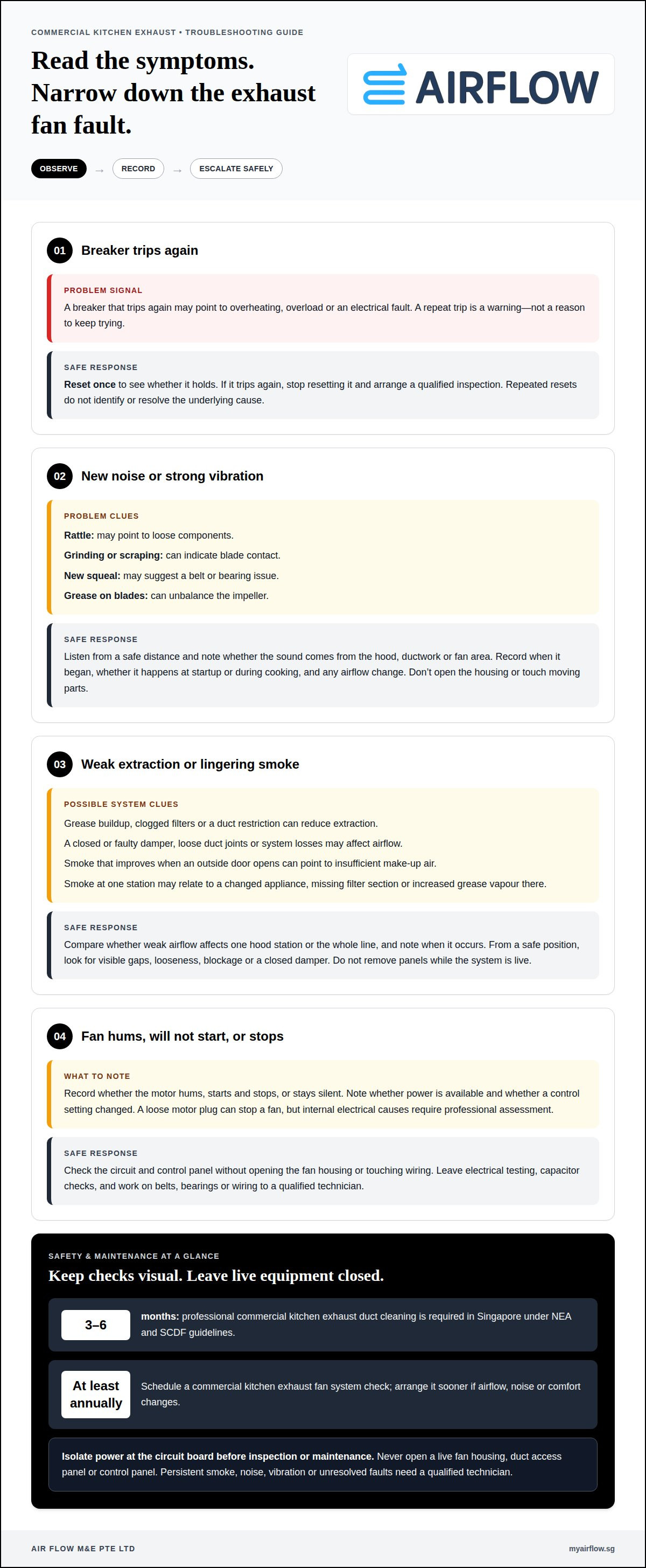
One reset is reasonable; repeated resets are not. When troubleshooting commercial exhaust fan problems, reset a tripped breaker once to see whether it holds. If it trips again, stop resetting it. Repeated trips can point to overheating, overload or an electrical fault.
It’s understandable to suspect a temporary electrical issue, especially if the fan stops suddenly. But a breaker that trips again is a warning, not a reason to keep trying. Repeatedly resetting it won’t identify the cause and may leave the underlying fault unresolved.
This guide shows you how to note the symptoms, distinguish likely causes and recognise when the issue needs professional attention. You’ll learn what unusual noise and vibration can indicate, how clogged filters or duct restrictions affect airflow, and why a fan can strain even while it’s running. You’ll also see what to consider when smoke lingers, mounting appears loose or the motor hums without turning. Start with safe visual checks and clear observations; don’t open live equipment. That gives a technician useful information and helps narrow down the cause without guesswork.
Key Takeaways
- Record when the fault began, what changed, and what the control panel shows to help narrow down the cause.
- Use noise, vibration, pressure changes and airflow symptoms to distinguish a likely fan issue from a wider system restriction.
- Keep clear of live equipment. A breaker that trips again after one reset should not be reset repeatedly.
- Look beyond the motor: filters, ductwork, mounting and make-up air can all affect exhaust performance.
Identifying unusual noise, vibration and pressure drops
In Singapore, professional commercial kitchen exhaust duct cleaning is required every 3–6 months under NEA and SCDF guidelines. Isolate power at the circuit board before inspection, and call a qualified technician for persistent smoke, noise, vibration or unresolved faults.
-
Note Noise, Vibration, and Pressure Changes
Record the sound, vibration and any change in airflow as soon as you notice them. Note when the fault began, what changed, and whether it occurs during startup or cooking. Include what the control panel shows and when the filters were last cleaned. A new rattle during operation differs from a steady hum, and that detail helps narrow the inspection.
-
Locate the Source of Fan Noise
Listen from a safe distance to identify whether the noise comes from the hood, ductwork or fan area. A rattling hood may point to loose components; grinding or scraping can indicate blade contact, while a new squeal may suggest a belt or bearing issue. Grease on the blades can also unbalance the impeller. Don’t open the housing to investigate.
- Check visible duct joints, access panels and mounting points for gaps, looseness or misalignment. A pressure drop alongside weaker airflow can indicate a restriction, a damper problem or system losses. Grease buildup in the hood or duct can reduce extraction, while loose joints may add noise. Record what you can see without touching moving parts or removing panels.
- Stop the fan and isolate the system at the circuit board before cleaning or maintenance. Never open a live fan housing, duct access panel or control panel. Persistent noise can precede reduced airflow, system failure or safety risks. Arrange a qualified technician’s inspection if strong vibration continues, smoke spills from the hood, or cleaning the filters doesn’t resolve the symptoms. A site inspection can locate the fault and assess the system safely.
Checking airflow, motor strain, and system balance
Weak extraction can stem from electrical, mechanical or airflow faults. Trace the kitchen exhaust path without opening live equipment.
-
Check Electrical Power and Motor Connections
If the fan won’t start, begin with its circuit and control panel. Note whether power is available and whether a control setting has changed. A loose motor plug can stop a fan, but don’t open the housing or touch wiring. When troubleshooting commercial exhaust fan problems, record whether the motor hums, starts and stops, or stays silent. These symptoms help narrow the diagnosis.
-
Check Fan Components and Airflow Paths
Inspect visible filters, ducts and dampers for grease, blockage, poor fit or a closed position. A slipping belt, dirty fan wheel or worn bearing can reduce airflow even while the fan runs. If cooking smoke persists, note whether opening an outside door improves hood capture. That change can point to insufficient make-up air. Don’t remove panels while the system is live.
- Compare extraction with normal operation. Note whether weak airflow affects one hood station or the whole line, and whether it occurs during particular cooking tasks. Smoke at one station may relate to a changed appliance, missing filter section or increased grease vapour there. Effective troubleshooting commercial exhaust fan problems means checking the full system, not just the motor.
- Leave electrical testing, capacitor checks and work on belts, bearings or wiring to a qualified technician. They can assess motor strain, fasteners and supports, then check hood capture and system balance after repair. Replacing a motor alone may not resolve duct resistance, grease buildup or insufficient make-up air. For recurring imbalance, commercial kitchen exhaust system adjustments can address the wider airflow path.
Tightening a loose motor or fan mounting
Strong vibration can result from loose mounting, wheel imbalance or bearing failure. Isolate the fan before maintenance; never tighten or clean components while they’re running.
- Switch off and isolate the exhaust fan at the circuit board before inspection. Look for visible movement at the motor mount, fan housing, supports and fasteners. Loose mounting can cause rattling and excessive vibration, while a blade contacting the housing can create scraping sounds. Don’t reach into the fan or adjust electrical connections.
- Check for signs of motor strain, such as unusual heat, dust buildup or repeated stopping. Poor ventilation around the motor, electrical faults, overloading, dust and insufficient servicing can contribute to overheating. Leave electrical testing and internal repairs to a qualified technician. A recurring failure may point to grease on the impeller, belt tension or excessive system resistance.
- Clean accessible fan blades and the motor housing only after isolation. Dirt or uneven grease buildup on a wheel can affect balance and airflow. Use a suitable cleaning method for the equipment, and avoid damaging blades, wiring or motor components. If access requires opening the fan housing or duct panel, leave the work to a technician.
- Schedule a commercial kitchen exhaust fan system check at least annually, and sooner if airflow, noise or comfort changes. Preventive maintenance should reflect building type, operating hours, indoor environment, and fan size and capacity. If an inspection reveals a damaged blade, worn motor or broken housing weld, the work may range from replacing a component to replacing the entire fan. The fan’s condition and the building’s needs guide that decision.
Clogged filters and reduced airflow
Grease-loaded filters can restrict extraction and let heat or smoke linger. Trace airflow from the hood towards the duct discharge to spot visible clues.
-
Check Filters for Clogs
Inspect the filters for grease buildup, missing sections or incorrect fitting. A filter fitted backwards can interfere with capture, while a loaded filter can reduce airflow through the hood. Note whether the obstruction affects one section or the full hood. Switch off the system before cleaning; don’t remove filters while the fan is operating.
-
Assess Airflow and Smoke Spillage
Observe the hood during normal cooking and note where smoke escapes. Weak airflow across the entire hood differs from smoke spilling at one station. A new or larger appliance, missing filter section, or menu change that creates more grease vapour can affect capture in one area. Record when and where spillage happens.
- Check visible grease channels and collection cups if the hood drips. An overflowing channel or cup can cause grease to escape, and incorrectly fitted filters can contribute. If smoke remains after filter cleaning, look beyond the filters: grease may have narrowed the plenum or duct, or a slipping belt may be reducing extraction. A running fan doesn’t necessarily mean ventilation is adequate.
- Look for visible ductwork obstructions, loose access panels and damage around the discharge. A bird’s nest in a roof or wall cap can restrict the exhaust path. If kitchen odours are reported nearby, the discharge location, system cleanliness and filtration suitability also warrant attention. Ongoing smoke spillage or uneven capture calls for a full system assessment, not simply a larger fan.
- When airflow remains poor, a design or installation issue may be involved, including incorrect sizing or placement. Custom-fitted ductwork can address a layout that needs a tailored duct solution. Discuss custom-fitted ductwork when duct routing or fit is part of the airflow problem.
Air Flow M&E Pte: Commercial Kitchen Exhaust System Addition & Alteration (A&A) Services
Air Flow M&E Pte provides Commercial Kitchen Exhaust System Addition & Alteration (A&A) Services when persistent airflow problems call for changes across the system. If checks suggest a failed motor, the company’s Commercial Exhaust Motor Installation can address the equipment replacement. A hood or duct layout that no longer suits the kitchen may call for Commercial Kitchen Hood Installation or custom-fitted ductwork.
These services suit commercial kitchens where basic cleaning hasn’t resolved smoke spillage, airflow loss or recurring fan strain, or where the system needs alteration to fit the operation. The right next step depends on the cause and affected components, rather than simply increasing fan capacity. Contact Air Flow M&E Pte to discuss your commercial kitchen exhaust system.
Keep Your Exhaust System Ready for Service
Use each fault as a prompt to review how the kitchen’s operating needs may be changing. New appliances, revised cooking methods or altered layouts can affect the performance of the existing exhaust system. Accounting for these changes in system planning can help avoid repeated resets or temporary fixes.
A clear diagnosis also helps focus the next decision. Air Flow M&E Pte Ltd provides Commercial Kitchen Exhaust System Addition & Alteration (A&A) Services, Commercial Kitchen Hood Installation and Commercial Exhaust Motor Installation. These options address different system needs, from changes to the exhaust setup to hood or motor installation.
For help applying a practical approach to troubleshooting commercial exhaust fan problems and deciding on a suitable next step, contact Air Flow M&E Pte Ltd for help. A clear path forward starts with understanding what your kitchen needs.
Frequently Asked Questions
Is it safe to keep resetting a tripped exhaust fan breaker?
No. One reset to see whether the breaker holds is reasonable, but stop if it trips again. Repeated trips can indicate overheating, overload or an electrical fault, not a harmless interruption. Don’t keep restoring power or open the control panel. Record when the trip happens and whether the fan had been running, then arrange qualified electrical diagnosis.
Quick Answer: Why Is My Commercial Exhaust Hood So Noisy?
Common causes include loose components, grease buildup, damaged or misaligned blades, ductwork problems and worn motor bearings. The sound can help narrow the possibilities: a rattle may point to loose parts, while scraping can suggest blade contact. Note whether the noise begins at startup, changes during cooking or continues steadily, and share that pattern during inspection.
Should You Repair, Maintain, or Replace the System?
Choose based on the fault, the condition of the affected parts and the building’s needs. Maintenance suits buildup or wear that can be addressed through cleaning and servicing. Repair may suit a localised component fault. Replacement becomes a consideration when damage is extensive or the existing arrangement no longer meets the kitchen’s operational needs. Recurring faults call for looking beyond the failed part.
What Are the Common Exhaust Fan Problems in Commercial Buildings in Singapore?
Common problems include dirty fan blades, blocked ducts or vents, worn motors, damaged belts and incorrect fan settings. Singapore’s humid conditions can also leave exhaust fans in kitchens, plant rooms and manufacturing areas vulnerable to rust, corrosion and moisture damage. If airflow gradually weakens, consider both the fan and its air path; a motor issue is not the only possible cause.
What happens if I ignore exhaust hood noise?
Persistent noise can signal deeper mechanical trouble. Leaving it unaddressed may contribute to system failure, reduced airflow and safety risks. For example, a loose or damaged component can worsen while the fan operates, and declining extraction may allow smoke to escape the hood. Treat a new or worsening sound as a fault to investigate, especially if kitchen capture also changes.
What should I check first when a commercial kitchen exhaust fan stops?
Start by checking whether the fan’s circuit has tripped and note the control panel status. If the circuit isn’t the cause, the fault may need professional diagnosis. Don’t open the housing to look for a loose motor plug or wiring issue. Also record whether the fan stopped during startup or normal operation, since that timing helps narrow the investigation.


