

A kitchen exhaust system for a halal-certified kitchen in Singapore must meet commercial ventilation and fire-safety requirements while supporting the kitchen’s halal processes. The National Environment Agency’s requirements include minimum extraction rates, and SCDF fire safety requirements specify suppression system installation for commercial cooking equipment above 15 kW heat output. Halal certification also depends on food-handling practices, not the exhaust system alone.
A well-designed kitchen exhaust system for a halal certified kitchen helps manage cooking fumes, heat and grease while fitting the kitchen’s layout and daily operation. Its design should also work alongside procedures that prevent cross-contamination between Halal and non-Halal food-contact surfaces.
This guide explains how commercial kitchen ventilation works in Singapore and what to consider when designing or installing an exhaust system. It also covers alterations, diagnosis and repairs, so you can understand how the hood, ductwork and exhaust motor fit into a compliant, practical kitchen setup.
Key Takeaways
- Understand how Singapore’s commercial ventilation and fire-safety requirements shape kitchen exhaust design.
- See why hood placement, duct routing and extraction need to work together with the kitchen’s layout and halal procedures.
- Learn what system changes or performance issues may call for professional assessment and repair.
- Explore how hood installation, exhaust motor installation and custom-fitted ductwork can support a suitable kitchen setup.
Commercial kitchen ventilation in Singapore
Commercial kitchen ventilation removes cooking heat, fumes and grease-laden air through an exhaust system. In Singapore, ventilation design also intersects with fire safety, food hygiene and halal operating practices.
Halal Kitchen Ventilation Requirements
Halal certification governs food preparation practices, while commercial ventilation requirements apply to the kitchen’s exhaust and cooking equipment. Keeping these responsibilities distinct helps operators plan a layout that supports safe cooking and halal procedures.
A MUIS halal certificate in Singapore is issued under Section 88A of the Administration of Muslim Law Act (Cap 3), according to Singapore Statutes Online. Certification also requires cleaning protocols that prevent cross-contamination between Halal and non-Halal food contact surfaces.
Ventilation planning should reflect the cookline and how the kitchen separates food preparation. For example, a kitchen with separate Halal and non-Halal work areas needs procedures that maintain those boundaries during cooking and cleaning.
Exhaust Discharge, Odour, and Grease Control
Singapore’s NEA commercial kitchen exhaust requirements include minimum extraction rates. These rates relate to removing cooking fumes, so system design needs to account for the cooking equipment and the hood it serves.
What NEA requirements apply to kitchen exhaust discharge, odour and grease control in Singapore? NEA requirements include minimum exhaust extraction rates and grease trap installation and maintenance standards. Discharge and odour controls should be considered as part of exhaust design, alongside grease management.
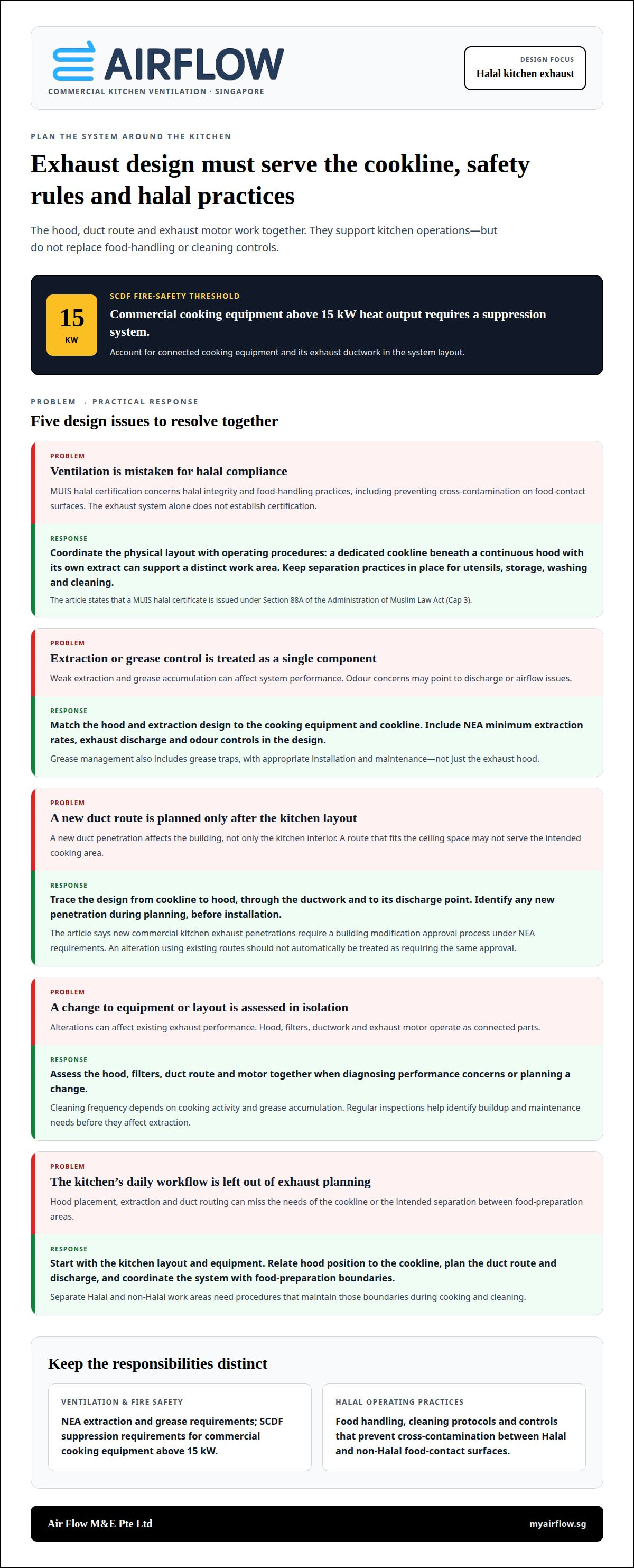
Grease control involves more than the exhaust hood: kitchens also need grease traps with appropriate installation and maintenance. Separately, SCDF fire safety requirements specify suppression system installation for commercial cooking equipment above 15 kW heat output. The system layout must account for connected cooking equipment and its exhaust ductwork.
These requirements affect day-to-day kitchen operations. A setup that accounts for extraction, grease handling and fire safety can support cooking without treating ventilation as an isolated component, helping maintain a safer, healthier workplace for busy staff. For individuals balancing demanding kitchen schedules who are seeking convenient nutritional support, Vitammies offers a focused range of gummy vitamins and wellness supplements.
Kitchen exhaust system design and installation
Design starts with the cooking layout, equipment and planned exhaust route. A kitchen exhaust system for halal certified kitchen operations should also support clear separation between food-preparation areas.
MUIS Certification and Exhaust Systems
MUIS halal certification focuses on halal integrity, including procedures that prevent cross-contamination between Halal and non-Halal food-contact surfaces. This matters because an exhaust layout can support kitchen operations, but it cannot replace food-handling and cleaning controls.
Does MUIS halal certification specify requirements for kitchen exhaust systems or ductwork? Certification requirements concern halal practices, while ventilation design must also address Singapore’s commercial-kitchen requirements. A dedicated cookline beneath a continuous hood with its own extract can support a distinct halal work area. Separate utensils, storage and washing arrangements help maintain operational boundaries.
Installation Permits and Approvals
Approval planning covers the building work needed to install or alter an exhaust route. A new duct penetration affects the building, not just the kitchen interior.
What permits and approvals are needed to install or modify a kitchen exhaust system in Singapore? New commercial kitchen exhaust penetrations require a building modification approval process under NEA requirements. Identify the duct route and any new penetration during design planning, before installation. An alteration confined to existing routes should not automatically be described as requiring the same approval.
How can a professional design exhaust hoods and ducts to prevent cross-contamination between halal and non-halal food preparation areas? A dedicated hood and extract for each cookline can support separation between work zones. The kitchen layout should also distinguish food storage, utensils and washing arrangements. These physical measures work alongside cleaning protocols, since ventilation alone does not establish halal compliance.
Before installation, the design should relate the hood position to the cookline, then trace ductwork to its discharge point. Route changes can affect the building and kitchen layout. Coordinating these elements early helps avoid a system that fits the ceiling space but fails to serve the intended cooking area. For a kitchen exhaust system for halal certified kitchen projects, professional exhaust system planning can bring the hood, extract and duct route into one coordinated design.
Kitchen ventilation alterations, diagnosis and repair
Changes to cooking equipment or the kitchen layout can affect the performance of an existing exhaust system. Diagnosis should consider the hood, filters, ductwork and exhaust motor as connected parts rather than isolated components.
How often should kitchen exhaust hoods, filters and ducts be cleaned and maintained? The required cleaning frequency depends on cooking activity and grease accumulation. Regular inspections help identify buildup and maintenance needs before they affect extraction.
What are common kitchen exhaust system risks, including fire hazards, odour complaints and certification issues? Grease accumulation and weak extraction can affect system performance, while odour concerns may point to discharge or airflow problems. Cleaning protocols also matter for halal operations because they help prevent cross-contamination between Halal and non-Halal food-contact surfaces.
A professional assessment can start by checking airflow complaints against the system layout and cooking equipment. The inspection can identify whether the issue relates to a blocked filter, grease in the duct, a motor problem or an altered cookline. For ductwork, grease measurements at 1m and 3m from each hood can help locate buildup and inform maintenance decisions.
- Low extraction: assess the hood, filters, motor and duct route to find possible restrictions or performance issues.
- Persistent odour: consider whether exhaust discharge, airflow or grease buildup needs attention.
- Layout changes: review whether the existing hood and duct arrangement still serves the cooking equipment.
Repairs should address the diagnosed cause. Replacing or altering one component without considering the full system may leave the original performance issue unresolved. Where cooking equipment changes, the exhaust arrangement may also need reassessment. SCDF fire safety requirements specify suppression system installation for commercial cooking equipment above 15 kW heat output, so equipment changes can affect the wider safety review.
For halal kitchens, maintenance records and cleaning procedures should align with the operation’s cross-contamination controls. Documented procedures help staff follow consistent practices for food-contact surfaces and kitchen equipment.
What kitchen exhaust and ventilation requirements apply to halal-certified kitchens in Singapore?
Halal-certified kitchens need to plan for separate but related obligations: Singapore food establishment rules, commercial ventilation and fire safety, and MUIS halal certification. A kitchen’s equipment, layout and hygiene infrastructure must meet the standards specified in the Environmental Public Health (Food Hygiene) Regulations.
Commercial exhaust requirements apply to the cooking operation, not to halal status itself. NEA requirements include minimum extraction rates, while SCDF fire safety requirements apply to exhaust duct systems connected to cooking equipment. These requirements shape how the hood and ductwork serve the cookline. Halal certification concerns how the business maintains halal integrity during preparation, storage, washing and cleaning.
- Food establishment: equipment, layout and hygiene infrastructure must meet the Environmental Public Health (Food Hygiene) Regulations.
- Halal application: under the Food Preparation Area Scheme, applicants must engage at least 3 permanent Muslim personnel.
- Business responsibility: the operator applies for certification, appoints the people responsible for halal within the company, and faces the audit.
Operational controls should match the kitchen’s layout. Dedicated cooklines, utensils, storage and washing arrangements can help maintain separation between Halal and non-Halal preparation. Cleaning protocols should prevent cross-contamination between food-contact surfaces. If sertu cleansing forms part of the kitchen’s procedure, the layout needs water, drainage and room to work.
Keep operating records aligned with those controls. Equipment lists, completed cleaning and maintenance records, chemical specifications, staff training records and any Sertu certificates can help document kitchen practices. Hotels serving halal and non-halal banquets, for example, need to consider cross-contact during food preparation and warewashing.
Certification requirements can change, so halal kitchen operators should confirm current requirements directly with MUIS or their certification consultant. For ventilation alterations tied to the kitchen layout, discuss commercial exhaust system changes with a professional.
Where the halal procedure includes ritual cleansing (sertu), it requires water, drainage and room to work. For food manufacturers and central kitchens, HACCP implementation requires temperature-controlled storage equipment to maintain specified temperature ranges under monitored and documented conditions. The guide identifies AS 1668.2 as the Australian standard for mechanical ventilation in buildings. It describes LPS 1263 as building on UL 1046 requirements and drawing on VDI 2052 for a grease-removal-efficiency testing methodology, while AS 1851 section 13.4.1.16 covers cleaning grease-arresting filters as required.
Air Flow M&E Pte: Commercial Kitchen Exhaust System Addition & Alteration (A&A) Services
Air Flow M&E Pte Ltd supports commercial kitchens with exhaust alterations and new installations. Its Commercial Kitchen Exhaust System Addition & Alteration (A&A) Services address projects where the kitchen layout or exhaust arrangement needs to change.
For a new or reconfigured cooking line, Commercial Kitchen Hood Installation and Commercial Exhaust Motor Installation can form part of the project. Custom-fitted ductwork can suit the exhaust route and kitchen configuration. The right scope depends on the equipment, hood position and building layout.
Consider professional support when planning a new kitchen, changing cooking equipment or addressing an exhaust issue that requires alteration. Clear project details, such as the proposed cookline layout and the work required, help define the installation or alteration scope.
Contact Air Flow M&E Pte to discuss your commercial kitchen exhaust project.
Plan the next stage of your kitchen project
As your project moves from planning to installation, treat the exhaust system as part of the kitchen’s overall design. A kitchen exhaust system for a halal-certified kitchen should suit the final equipment layout and how each work area will operate. Bringing these decisions together early gives the exhaust design a clear role in the project, rather than leaving it as a late adjustment.
For a new commercial kitchen, a layout change or an exhaust issue requiring alteration, Air Flow M&E Pte Ltd can support the exhaust work. Discuss the intended kitchen configuration and project scope to clarify whether it calls for an addition, alteration or installation.
Move forward with a practical plan for your commercial kitchen. Contact Air Flow M&E Pte Ltd to discuss your project and take the next step with confidence.


