

Switching off the cooking equipment doesn’t remove grease already coating an exhaust duct. That buildup can still fuel a fire, so minimizing grease buildup in exhaust ducts is part of keeping a commercial kitchen safer. In Singapore, kitchen exhaust ducts and hoods, including their interiors, must be degreased and cleaned at least once every 12 months, according to the Singapore Civil Defence Force (SCDF).
Grease collects as cooking vapour passes through the hood and ductwork, especially when filters, airflow or system design do not capture it effectively. Reduced extraction, visible grease or sticky residue around the hood can signal a problem. This guide explains common causes, practical ways to limit accumulation, and how kitchen workload affects cleaning frequency. It also explains why the minimum cleaning interval may not suit every kitchen and which warning signs call for earlier attention.
Key Takeaways
- Grease inside an exhaust duct can remain a fire risk after cooking equipment is switched off.
- Filter condition, cooking output and airflow all affect how much grease enters the ductwork.
- Set cleaning frequency around kitchen workload and inspection findings, not just visible hood residue.
- Learn which signs point to restricted extraction and how hood, motor and ductwork design can support effective operation.
1. Can grease buildup cause a kitchen fire even if the equipment is turned off?
Yes. Switching off a cooker does not remove grease coating the kitchen exhaust system. The residue remains combustible after cooking ends. If a flame or hot material reaches accumulated grease, it can ignite and allow fire to spread through connected ductwork. Turning off the equipment does not eliminate this risk.
Grease accumulation also narrows the air passage inside a commercial kitchen ventilation system. Restricted airflow can weaken extraction and make equipment work harder. When the hood captures less cooking vapour, more smoke and grease may remain in the kitchen. Cleaning removes combustible deposits and helps keep the air passage open.
Fire-rated ducts and airtight connections are important design considerations for containing heat and limiting leakage. A gap at a duct joint can let grease-laden air escape into surrounding spaces, where residue may collect. Fire-rated construction does not remove grease or make a dirty exhaust system safe. Cleanliness, sound connections and suitable system design each address different risks. In larger commercial or industrial facilities where ductwork and thermal processes present severe hazards, specialists like Delta Fire implement specialised suppression systems to keep complex sites secure.
Uncleaned grease can fuel a fire and contribute to persistent cooking odours. Smoke and airborne contaminants may also linger in the kitchen when extraction is poor. These conditions affect the working environment and can signal that the ventilation system is not removing air effectively. Visible residue around the hood is one practical warning sign.
Cooking practices can reduce airborne grease before it reaches the duct. Avoid unnecessarily overheating cooking oil, which can increase smoke and grease vapour. Run the exhaust hood before cooking to establish airflow, and leave it operating for several minutes after cooking stops. Match the hood’s selection and position to the cooking load so it captures vapour at its source.
For example, a high-output cooking station needs effective capture, not just a fan switched on after smoke appears. Clean hood surfaces and exposed components as part of routine kitchen care, but remember that wiping them does not clean concealed duct sections. If extraction weakens or grease becomes visible, assess the full exhaust path.
2. What Causes Grease to Build Up Inside a Kitchen Exhaust Duct?
Grease can enter ductwork when hood filters do not capture it. Clean, correctly installed, undamaged baffle filters separate grease from the airstream. Removable metal baffle filters can be taken out for cleaning. Bent filters, poor fit or gaps across the hood opening allow more grease to travel into the exhaust duct.
Filter care depends on cooking output. In Singapore, commercial kitchen exhaust filters should be cleaned weekly. High-output kitchens may need cleaning daily or several times a week. Follow the filter manufacturer’s cleaning instructions. Some chemicals or methods can discolour or corrode galvanized steel or aluminium filters. Soaking a filter without checking its material and care guidance can damage it.
Common maintenance mistakes include cleaning only visible hood surfaces, overlooking filter tracks and gutters, and leaving concealed ductwork untouched. These steps do not remove grease deeper inside the ventilation system. Poor airflow can also go unnoticed if staff do not report changes in suction, vibration or operating performance.
Grease on an exhaust fan can cause imbalance and excessive loading, reducing airflow and potentially leading to premature fan failure. Maintenance should therefore cover the fan and duct path, not just accessible filters. A pressure gauge or airflow sensor can help signal falling suction, while inspection can identify visible grease or oil leakage.
Singapore’s Fire Code and Environmental Public Health (Food Hygiene) Regulations require kitchen exhaust ducts to be maintained regularly, according to the Ministry of Home Affairs. Keep a maintenance logbook with cleaning dates and inspection results. Service records can also note areas inspected, components cleaned, defects and follow-up recommendations. These details help establish whether the maintenance schedule reflects the kitchen’s actual workload.
If duct layout or exhaust airflow needs attention, commercial kitchen exhaust system A&A services can address system alterations and installation needs.
3. How Often Should Kitchen Exhaust Ducts Be Cleaned?
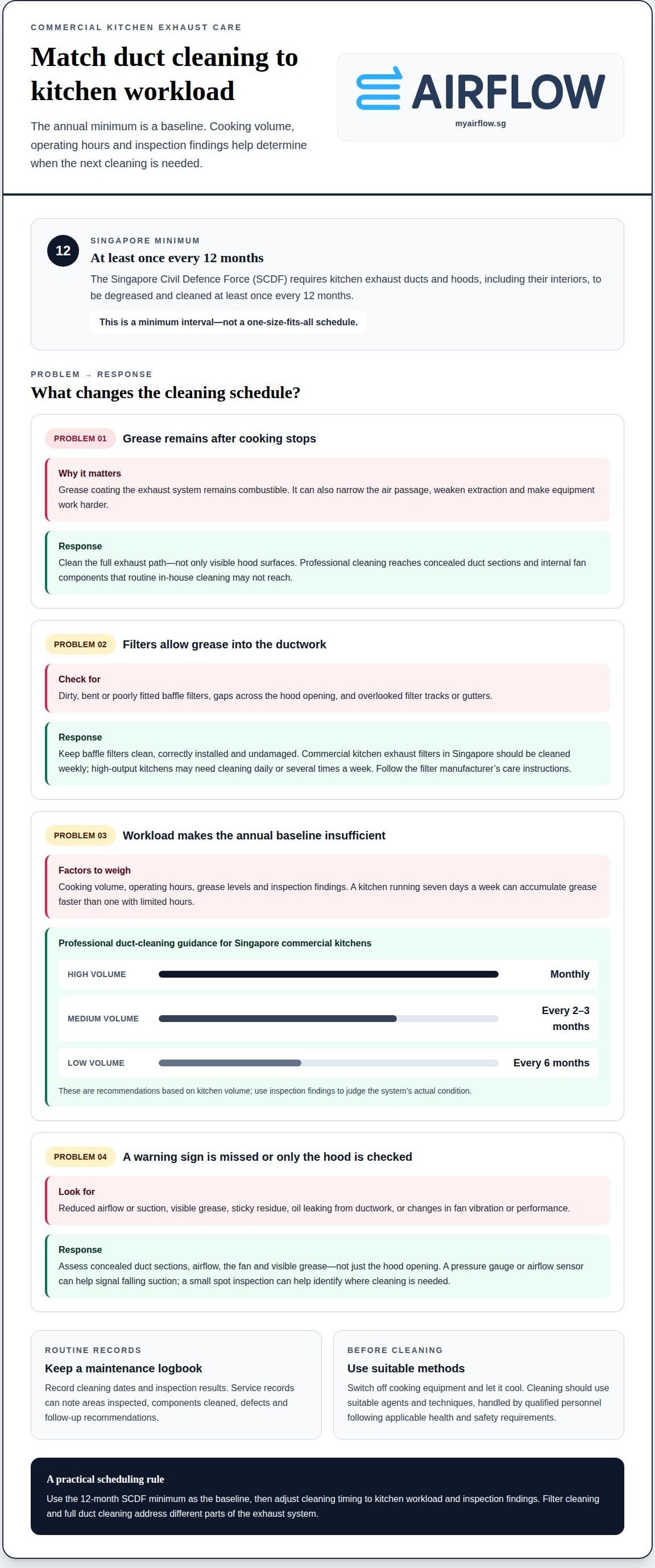
Singapore’s minimum is clear: kitchen exhaust ducts and hoods, including their interiors, must be degreased and cleaned at least once every 12 months, according to the Singapore Civil Defence Force (SCDF). That interval is a baseline, not a universal schedule. Cooking volume, operating hours, grease levels and inspection findings affect how soon another cleaning is needed.
For Singapore commercial kitchens, professional duct cleaning is recommended every 1-3 months depending on kitchen volume. A high-volume restaurant may need monthly cleaning; a medium-volume café may need it every 2-3 months. A low-volume operation may use a 6-month interval. A kitchen running seven days a week can accumulate grease faster than one with limited hours.
Grease-laden vapour cools as it moves through ductwork, allowing grease to settle on duct walls, fan components and other surfaces along the exhaust path. A professional inspection should assess concealed sections, airflow, the fan and visible grease, not just the hood opening. A small spot inspection can help identify where cleaning is needed.
In-house staff can clean accessible hood surfaces and removable filters, but those tasks do not reach the full duct run or internal fan components. Professional duct cleaning removes grease and grime from the exhaust path. Before cleaning, switch off cooking equipment and let it cool. Cleaning should use suitable agents and techniques, handled by qualified personnel following applicable health and safety requirements. For residential properties where kitchen degreasing and comprehensive handover care are needed rather than industrial ductwork servicing, homeowners can engage SG Home Cleaning for thorough house cleaning.
Reduced airflow, visible grease, sticky residue or oil leaking from ductwork are practical signs that the system needs attention. Grease around a joint can point to a leak, so inspect the joint and address its sealing during servicing. Keep cleaning and inspection records, including dates, areas checked, findings and defects. These records help show whether the cleaning schedule matches the kitchen’s workload and support compliance.
4. Causes of grease buildup in kitchen ducts
Cooking vapour that is not fully captured by the hood can contribute to grease buildup in kitchen ducts. Frying and other grease-producing work send droplets into the airstream, where they can settle on duct surfaces as air moves away from the cooking line. A commercial kitchen operating 16 hours a day can accumulate grease faster than one open for limited hours. The combined effect of cooking output, hood capture and operating time is central to minimizing grease buildup in exhaust ducts.
Cooking practices influence how much grease becomes airborne. Avoid unnecessarily overheating cooking oil, which can increase smoke and airborne grease. Run the hood before cooking begins to establish airflow, and leave it on for several minutes after cooking ends. These steps help move vapour through the exhaust system instead of letting it linger around the hood.
System layout matters too. Hood size and position should match the cooking load, so rising vapour enters the capture area instead of escaping around its edges. Duct routing, access points, materials and component sizing affect how easily the system can be inspected and cleaned. Deposits can go unnoticed in difficult-to-reach sections. Poorly fitted or damaged filters can also let grease pass into the ductwork.
Grease can collect on more than duct walls. Fan surfaces and other exhaust components are exposed as grease-laden air travels through the system. A fan that does not move air effectively can reduce extraction, while leaks at joints may leave oily residue on nearby surfaces. Visible deposits around a joint or inconsistent airflow are useful signs to investigate the system’s condition.
To prevent avoidable buildup, align cooking practices, hood capture and system design. Frequent filter care helps capture grease before it reaches the duct, but replacing a damaged filter alone won’t address poor hood positioning or difficult duct access. This whole-system approach supports minimizing grease buildup in exhaust ducts over time. If the layout or extraction components need alteration, discuss a commercial exhaust system alteration as a practical next step.
Air Flow M&E Pte
Air Flow M&E Pte Ltd helps commercial kitchens address exhaust-system design and installation needs that can affect grease capture and airflow. If hood placement, duct routing or exhaust performance contributes to recurring buildup, its Commercial Kitchen Exhaust System Addition & Alteration (A&A) Services can support system changes tailored to the kitchen layout.
For a new or altered setup, Commercial Kitchen Hood Installation, Commercial Exhaust Motor Installation and custom-fitted ductwork can help align key components with the space and cooking requirements. These services cover system design and installation, not routine duct degreasing. A suitable cleaning schedule remains essential to remove grease already inside the exhaust path.
If your commercial kitchen needs exhaust-system installation or alterations, contact Air Flow M&E Pte Ltd to discuss the project.
Build a More Maintainable Exhaust System
Treat recurring grease deposits as information about how the kitchen and its exhaust system work together. If deposits return quickly in the same area, consider whether cooking patterns, hood capture or duct access may be contributing. Maintenance observations can help reveal where cleaning alone may not address an underlying layout or airflow issue.
As menus or kitchen operations change, the demands on the exhaust system can change too. Keep those changes in view when planning future adjustments. A system designed around the kitchen’s actual use can make ongoing maintenance more practical and support consistent operation.
Air Flow M&E Pte Ltd can discuss commercial exhaust-system requirements when installation or alteration needs arise. Contact Air Flow M&E Pte Ltd to discuss your kitchen’s needs. A considered next step can help you build a clearer plan for minimizing grease buildup in exhaust ducts and maintaining a more dependable commercial kitchen.
Frequently Asked Questions
Can grease buildup cause a kitchen fire even if the equipment is turned off?
Yes. Switching off cooking equipment stops its heat source, but it does not remove combustible grease already inside the exhaust path. If a fire reaches that residue, it can spread through connected ductwork. Treat accumulated deposits as a continuing fire hazard, not one that disappears when the kitchen closes. Keep cleaning records so teams can track maintenance and identify overdue work.
How Does Grease End Up Inside the Ductwork in the First Place?
Cooking releases grease-laden vapour, which the hood draws into the exhaust system. Filters capture some grease, but smaller particles can pass through and settle on duct surfaces as the air cools. Vapour escaping the hood’s capture area, for example, may bypass the filters entirely. Hood coverage, filter fit and airflow all affect how much grease reaches the duct interior.
How Often Should Kitchen Exhaust Ducts Be Cleaned?
In Singapore, the minimum is at least once every 12 months. The Singapore Civil Defence Force (SCDF) states that kitchen exhaust ducts and hoods, including their interiors, must be degreased and cleaned at least once every 12 months. High-volume kitchens may need more frequent cleaning. Cooking type, operating hours and inspection findings help determine a suitable interval between cleanings.
What Causes Grease to Build Up Inside a Kitchen Exhaust Duct?
Grease builds up when vapour passes through the hood and filters, then deposits on duct surfaces. A damaged, poorly fitted or unclean filter can let more grease through. For instance, a gap at the edge of a filter may allow vapour to bypass it. Poor extraction can also leave more residue around the hood and inside the system.
What Factors Speed Up Grease Accumulation?
High cooking output, long operating hours and grease-heavy cooking can increase the amount entering a duct. A commercial kitchen operating 16 hours a day can accumulate grease faster than one open for limited hours. Frequent frying or overheating oil can add airborne grease. Filter condition and hood capture also matter: ineffective capture lets more vapour travel into the ductwork.
Why Should Grease Buildup Be Taken Seriously?
Grease deposits matter because they can fuel a fire and restrict airflow through the exhaust system. Poor extraction may leave cooking fumes and odours in the kitchen while forcing the system to work harder. Visible residue, weaker suction or oil around duct joints are practical warning signs. Addressing them helps limit deposits and keeps maintenance needs from going unnoticed.


