

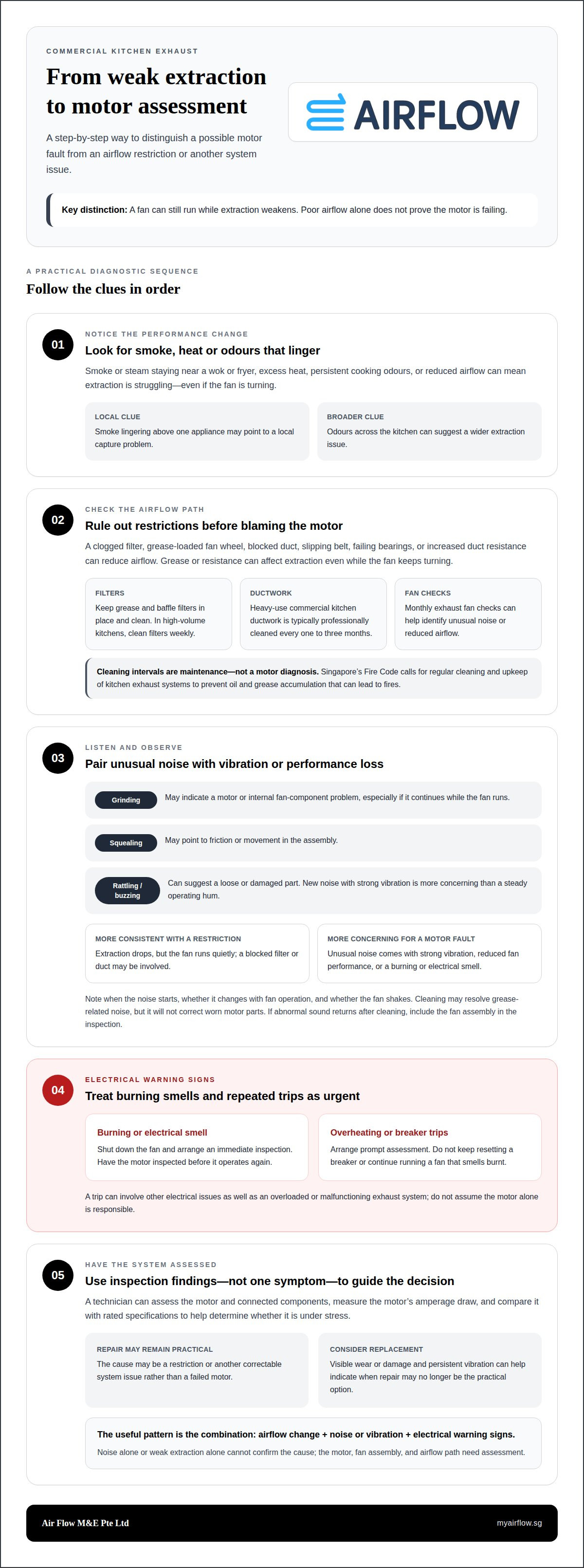
A fan that still runs can still be failing. Signs you need a new commercial kitchen exhaust motor include weak extraction, grinding or rattling, overheating, electrical faults, and visible wear or damage. These symptoms need attention, but poor airflow alone does not prove the motor is at fault. Blocked filters, grease buildup, or another system issue can also restrict extraction.
Smoke or heat lingering around the cooking line is often the first problem people notice. Check whether it occurs alongside unusual noise, vibration, a burning smell, or repeated breaker trips. These clues can help indicate whether the motor is nearing the end of its useful life or whether another system fault is causing similar symptoms.
This guide explains what each warning sign may indicate, what to do when it appears, and how motor replacement fits into commercial kitchen exhaust work in Singapore. The goal is to help distinguish a motor problem from an airflow issue elsewhere in the system, so decisions are based on the symptoms rather than guesswork.
Key Takeaways
- Weak extraction can point to a motor problem, but restrictions elsewhere in the exhaust system may also be responsible.
- Grinding, squealing, or rattling noises can help distinguish a possible motor fault from a fan that simply sounds different during normal operation.
- Overheating, a burning smell, or repeated breaker trips are electrical warning signs that call for prompt attention.
- Visible wear and persistent vibration can help show when repair may no longer be the practical option and motor replacement should be considered.
Removal of smoke, heat, grease and cooking odours
A functioning exhaust system draws smoke, excess heat, grease vapours, and cooking odours away from the cooking line. If smoke or steam lingers near a wok or fryer, extraction may be struggling. A motor fault can reduce airflow, but it is not the only possible cause. Clogged filters, grease-loaded fan wheels, blocked ducts, or other malfunctioning parts can produce similar symptoms. Even a spinning fan may move less air if grease coats its wheel or resistance builds in the ductwork.
Check the full airflow path before treating weak extraction as proof of motor failure. Grease on filters can restrict air entering the hood; grease on the fan wheel can impede its movement; and buildup in ducts can narrow the passage. A slipping belt, failing bearings, or increased duct resistance can also reduce airflow while the fan keeps turning. For example, smoke lingering above one appliance may point to a local capture problem, while odours across the kitchen can suggest a broader extraction issue.
Grease and baffle filters capture droplets before they travel further into the exhaust system. Keep them in place and clean, because a loaded filter restricts ventilation. In high-volume kitchens, filters should be cleaned weekly. Heavy-use commercial kitchen ductwork is typically professionally cleaned every one to three months. These are maintenance intervals, not proof of motor failure. If extraction remains poor after grease buildup is addressed, the motor and other airflow components need assessment.
Grease leaking from an exhaust hood can signal buildup in the system and create a fire hazard. A leak alone does not diagnose a motor fault. Consider it alongside smoke that will not clear, persistent cooking odours, reduced airflow, or fan grinding. Singapore’s Fire Code calls for regular cleaning and upkeep of kitchen exhaust systems to prevent oil and grease accumulation that can lead to fires. If cleaning does not restore extraction, the system may need further assessment, including its motor, fan wheel, and duct resistance.
Grinding, squealing, or rattling fan noises
A change in fan sound can be an early clue that a component is wearing or moving incorrectly. Note whether the noise persists during normal cooking and whether airflow or vibration changes at the same time.
Unusual Fan Noises and Worn Components
Grinding, rattling, or buzzing can indicate a problem with the motor or internal fan components. Squealing may point to friction or movement in the assembly, while repeated rattling can suggest a loose or damaged part. Continued operation can worsen component damage and disrupt the fan’s ability to capture cooking fumes.
Note when the noise starts, whether it changes with fan operation, and whether the fan shakes. New grinding paired with vibration is more concerning than a steady operating hum. Monthly exhaust fan checks can help identify unusual noise or reduced airflow before performance drops further. Record changes in sound and airflow for the inspection.
Noises as Signs of Motor Problems
A faulty exhaust motor is more likely when unusual noise comes with strong vibration, reduced fan performance, or a burning or electrical smell. A blocked filter or duct is more likely to restrict airflow without causing new grinding or rattling. Noise alone cannot confirm the cause, so the motor and connected components need inspection.
For example, if extraction falls but the fan runs quietly, an obstruction may be more likely than a noisy motor fault. If grinding continues while the fan runs, or vibration increases with the sound, worn bearings or another internal problem may be involved. Persistent odours can accompany poor extraction, but a burning smell calls for shutting down the fan and promptly inspecting the motor.
Cleaning can resolve noise caused by grease affecting fan movement, but it won’t correct worn motor parts. If abnormal sound returns after cleaning, include the fan assembly in the next inspection. For ongoing performance concerns, commercial exhaust motor guidance can help clarify what the symptoms may indicate.
Motor overheating, electrical faults, and breaker trips
Heat, electrical smells, and repeated breaker trips can signal a motor fault or overload. Treat them as operational warnings, not routine interruptions.
Motor Overheating and Electrical Faults
An overheating motor or electrical fault may make it difficult to maintain exhaust airflow. A malfunctioning or overloaded exhaust system can trip its circuit breaker. If a burning or electrical smell comes from the fan, shut it down and arrange an immediate inspection. Continuing to run it can cause further motor damage and leave cooking fumes less effectively removed.
During an inspection, a technician can measure the motor’s amperage draw and compare it with its rated specifications to help determine whether the motor is under stress. A breaker trip can also involve other electrical issues, so the motor and connected system need assessment rather than assuming the motor alone is responsible. This helps support safe operation and applicable electrical standards and compliance.
Recurring Breakdowns and Repair Timing
Repeated breaker trips, overheating, or recurring shutdowns need attention, even if the fan restarts. Arrange an inspection promptly, and do not keep resetting a breaker or running a fan that emits a burning smell. Shut down the fan immediately if the smell appears, and have the motor inspected before it operates again.
There is no single repair deadline for every symptom. A burning or electrical odour calls for immediate shutdown and inspection, while repeated trips also warrant prompt attention. A technician can assess the motor’s measured amperage, operating behaviour, and repair history against its rated specifications. This helps distinguish a repairable issue from a failing motor that affects reliable exhaust.
Frequent breakdowns also change the repair-versus-replacement decision. If one repair costs more than 50% of the cost of a replacement fan, replacing the fan is usually the smarter choice. That comparison is a guide, not a substitute for diagnosing the fault. Restoring motor function can’t remove a blockage or correct another system issue, so the inspection should account for airflow and the exhaust system’s condition.
Signs of wear or damage in kitchen exhaust motors
Visible damage, new vibration, or excessive fan movement can indicate wear in the motor or another component. Consider whether these signs mean you need a new commercial kitchen exhaust motor, especially if they continue during operation. They can also reduce extraction and affect comfort near the kitchen and dining areas.
Strong or new vibration can indicate imbalance, loose mounting, or bearing failure. Excessive movement may result from a warped blade, misalignment, or unsecured mounts or roof curb connections. A fan that shakes while running needs assessment of its full assembly, not just a quick look at the motor. Identifying the cause helps determine which component needs attention.
Grease buildup on a fan wheel or inside ductwork can increase resistance and reduce airflow, even when the motor still runs. This buildup can also create fire hazards, so cleaning and upkeep remain important alongside motor assessment. If airflow remains poor after cleaning, or vibration and movement continue, the motor and connected components need closer inspection.
How do you choose a replacement motor for a commercial kitchen exhaust fan? Match its capacity to the hood system’s exhaust volume, then account for the system layout and operating needs. A poorly matched motor may not provide the extraction the hood requires. Persistent damage or declining operation can be signs you need a new commercial kitchen exhaust motor, but the full setup should guide the replacement choice.
How long do commercial kitchen exhaust motors typically last? There isn’t one lifespan that applies to every kitchen. Operating conditions, use, grease buildup, and maintenance all affect wear. A fan more than 10 years old and showing warning signs may be more cost-effective to replace than to keep repairing.
What Singapore regulations or fire-safety requirements apply? Commercial kitchen exhaust systems should comply with SCDF, SFA, and FSC regulations. Singapore’s Fire Code calls for regular cleaning and upkeep to prevent oil and grease accumulation that can lead to fires.
When persistent vibration, visible damage, or age-related warning signs point to replacement, arrange commercial exhaust motor installation for your kitchen.
Air Flow M&E Pte: Commercial Exhaust Motor Installation
Air Flow M&E Pte provides Commercial Exhaust Motor Installation when a failing motor needs replacement. If weak extraction persists alongside vibration, overheating, or repeated electrical faults, motor installation may be the next step after assessing the wider exhaust system. Replacing a motor alone will not resolve airflow problems caused by grease buildup, duct resistance, or inadequate make-up air.
The right solution depends on how the motor works with the hood and ductwork. For broader changes to a commercial kitchen exhaust system, Air Flow M&E Pte also provides Addition & Alteration (A&A) Services and custom-fitted ductwork. These services address the exhaust setup as a whole when the issue extends beyond the motor.
If your kitchen’s exhaust motor shows persistent signs of failure, contact Air Flow M&E Pte to discuss installation.
Plan the Next Step for Your Exhaust System
Recognising signs you need a new commercial kitchen exhaust motor is a starting point, not the whole decision. Consider how replacement fits the kitchen’s hood, ductwork, and operating needs. This broader view can help direct the work toward the component or system change that addresses the problem.
Air Flow M&E Pte Ltd offers Commercial Exhaust Motor Installation, Commercial Kitchen Exhaust System Addition & Alteration (A&A) Services, and Commercial Kitchen Hood Installation. The right service depends on the work required, whether it involves the motor alone or a wider exhaust-system change.
Move forward with a clear understanding of the installation or alteration your kitchen needs. Contact Air Flow M&E Pte Ltd to discuss your commercial kitchen exhaust project and its next steps.
Frequently Asked Questions
What are the signs a commercial kitchen exhaust fan motor is failing?
Common warning signs include reduced airflow despite a running fan, new grinding or rattling, strong vibration, overheating, and repeated breaker trips. A burning or electrical smell means the fan should be shut down and inspected promptly. Note whether symptoms occur together, such as weak extraction and increasing vibration. This gives a technician useful context when assessing the motor and fan assembly.
How much does commercial kitchen exhaust motor repair or replacement cost in Singapore?
The cost depends on whether the work involves repair, motor replacement, or wider exhaust-system changes. Air Flow M&E Pte Ltd provides fixed upfront rates with no hidden fees. The scope of work affects the quoted amount, including whether the motor alone needs attention or the project involves related installation work. Contact the company for pricing based on the specific work required, as no general figure can represent every kitchen.
Can a commercial kitchen exhaust motor be repaired, or should it be replaced?
Repair may suit an isolated, repairable fault; replacement is worth considering when the motor is damaged or keeps breaking down. The decision depends on the diagnosed fault, the motor’s condition, and whether repairs restore dependable operation. Replacing a sound motor will not solve a problem elsewhere in the exhaust system. A technician’s assessment helps match the work to the actual cause.
What are the risks of operating a commercial kitchen with a failing exhaust motor?
A failing motor can reduce extraction, leaving smoke, heat, grease vapours, and cooking odours around the kitchen. Poor removal of grease-laden air can also contribute to grease accumulation in the exhaust system, creating a fire hazard. Smoke lingering over a busy cooking line can affect conditions during service. A burning smell or recurring electrical fault calls for shutdown and prompt inspection.


